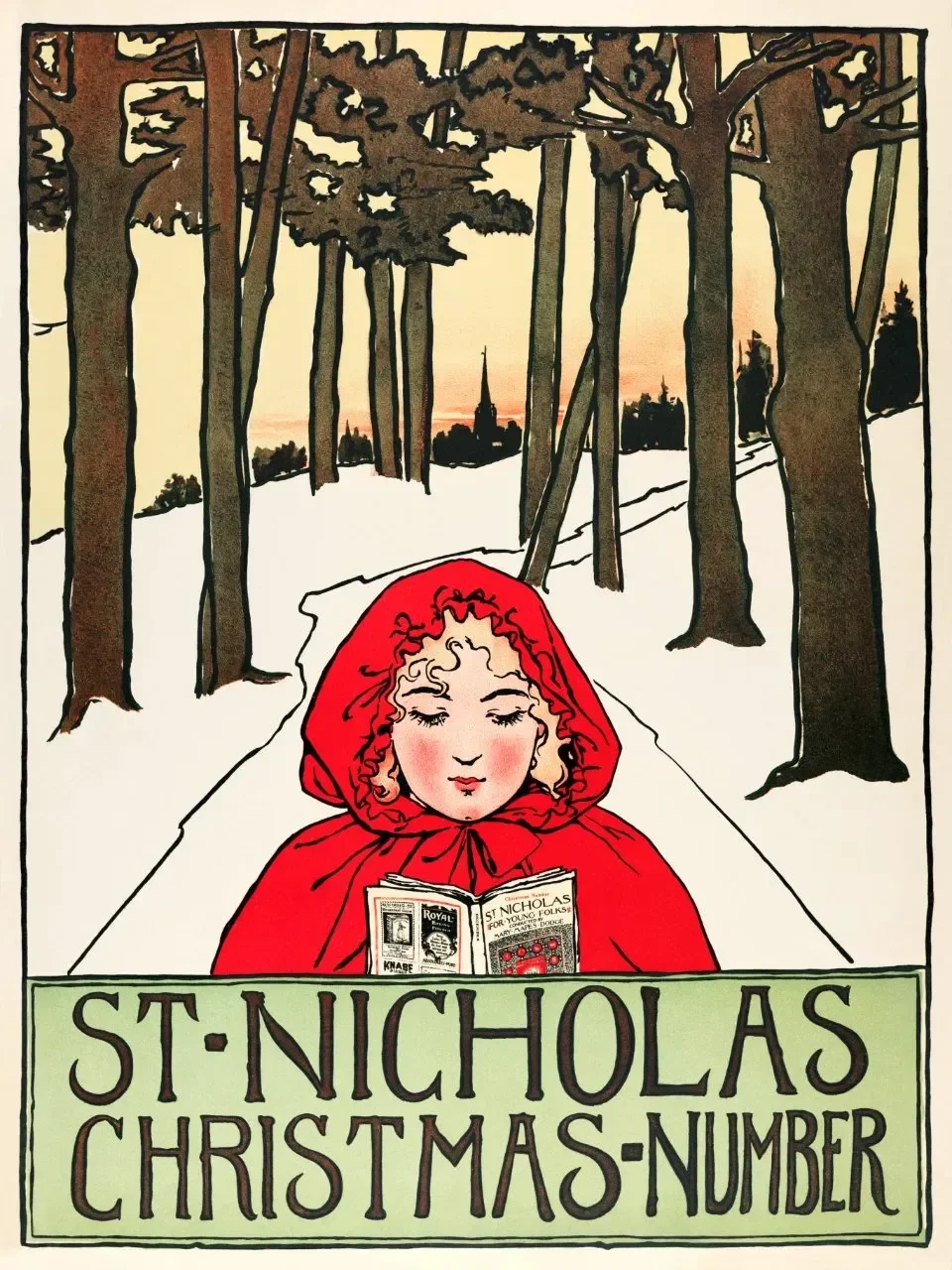
The 25 most beautiful sentences I read in 2025
Starting in 2020, when I thought we could all use a little more beauty, I wrote an essay called The 20 most beautiful sentences I read in 2020. I found so much value in the process of writing that essay that I did it again in 2021, then 2022, and so on. And I now realize this practice was me planting the seeds for what, in late 2023, became this newsletter.
I have been working on this post all year and am thrilled to finally be able to share it with you. What follows are the 25 most beautiful sentences I read in 2025, plus the reasons I love them. I hope you find some beauty here.
“We were amongst the rhododendrons. There was something bewildering, even shocking, about the suddenness of their discovery. The woods had not prepared me for them. They startled me with their crimson faces, massed one upon the other in incredible profusion, showing no leaf, no twig, nothing but the slaughterous red, luscious and fantastic, unlike any rhododendron plant I had seen before.”
Rebecca by Daphne du Maurier
Why I love it: Throughout Rebecca, the rhododendrons are murderous. They’re blood-red but also luscious and fantastic, so full the narrator can’t even see a twig. Absolute perfection.
“I devoted myself to studying and to many things that were difficult, alien to me, just so I could keep pace with that terrible, dazzling girl.”
My Brilliant Friend by Elena Ferrante
Why I love it: The juxtaposition of terrible and dazzling is the only way the narrator, Elena, could have spoken about Lila, the girl. For anyone familiar with this series, you can vouch for how perfectly said this statement is!
“Even the trees of St. Paul were warning against hope: their leaves were dressed and ready for death.”
The Probable Son by Cindy Jiban
Why I love it: Autumnal trees really are dressed and ready, as if wearing a costume they are about to shed. The tragic part about that beauty is that they’re all dressed up to die. This passage comes at the very beginning of the book and perfectly sets readers up for what’s to come.
“She recalls visiting the ammonites and dinosaur remains with Beatrice and seeing Mary Anning’s ichthyosaur fossil with its supper of fish bones preserved in its rib cage, Beatrice telling her how important it is that women seek equal citizenship of the mind.”
The Eights by Joanna Miller
Why I love it: The idea of women claiming equal citizenship of the mind, back in the 1920s when this book takes place, is one of the most seductive concepts I read about all year. I also think the memory of the fish bones preserved in a fossil’s rib cage is beautiful, as if the moment the narrator learned about seeking equal citizenship of the mind is fossilized right there in that moment.
“And how much lighter it made her feel to speak this truth aloud. She was a feather. She was a snowflake. She was the air itself.”
Favorite Daughter by Morgan Dick
Why I love it: Similes are a gentle slap on the hand, but metaphors like this are a punch. I can actually feel the weight taken off the character after sharing her truth here. Beautiful.
“We all come into the world unfinished, still stitching ourselves together.”
You Could Make This Place Beautiful by Maggie Smith
Why I love it: Using tactile imagery to express emotions is nothing new, but I like Smith’s spin on the perpetuity of stitching oneself together. It’s a forever project, finishing ourselves.
“The sea had become a violet paste. The noise of the storm and the noise of the city made a furious commotion.”
Troubling Love by Elena Ferrante
Why I love it: Whenever I read these two sentences, my brain subconsciously interprets violet as violent. I think I’m quick to think violent because the imagery evokes violence, even if the sea is actually a rather pretty color. In Italian, the book’s original language, the words are viola and violenta, respectively. I wonder if Ferrante intended that kind of confusion. This passage is beautiful because it makes me pay attention.
“Reading isn’t a privilege, sir. I believe we all have the right to leave our problems and escape into another world, if only through the written word.”
All the Colors of the Dark by Chris Whitaker
Why I love it: I had to include a sentence about reading! And I absolutely agree that reading is a right, not a privilege. 👏🏼👏🏼👏🏼
“At that time, I was only newly attuned to the life-sucking energy of pity, the way it stretched the canvas for shame.”
Why I love it: Here’s another tactile image used to portray emotions. In this instance, the stretched canvas reveals how shame grows with pity. It’s so much more interesting to talk about emotions as something you can hold and stretch in your hands.
“Sometimes in life you have to let your heart and bones off the hook of yourself.”
Loved and Missed by Susie Boyt
Why I love it: This is such a clever turn of phrase. In context, when reading the book, I didn’t question what this meant. But months removed from reading this sentence for the first time, I take something different from it each time I read it. Is she speaking of the physical heart and bones? The metaphysical, emotional heart and physical bones? There is a separation between your heart, bones, and yourself, but we seldom think of that way and I like how lost I get in considering it. To me, that’s a perfect sentence.
“Fun was fine when you were young, but as you got older it was kindness that counted, kindness that showed up.”
Cleopatra and Frankenstein by Coco Mellors
Why I love it: I would argue that kindness always matters, but I think this is a lovely sentiment. The quote I most often see from this book is ,“When the darkest part of you meets the darkest part of me, it creates light,” which is also lovely, but I wanted to share something new. I found this soft focus on kindness really struck me emotionally.
“Time could not wreck the perfect symmetry of those walls, nor the site itself, a jewel in the hollow of a hand.”
Rebecca by Daphne du Maurier
Why I love it: I could have dedicated this entire post to Rebecca, but instead I will include a second and final quote. This speaks of Manderley, the iconic estate the unnamed narrator comes to live in. She’s as enamored with the house as she is intimidated by it and I think she expresses it gorgeously.
“There is a land of the living and a land of the dead and the bridge is love, the only survival, the only meaning.”
Wild Dark Shore by Charlotte McConaghy,
Why I love it: There was so much beauty in this book about destruction. In writing down these sentences and explaining why I love them, I’m learning how much I appreciate a good contrast. Here, the narrator is on a desolate island near Antarctica, which is being swallowed by the sea due to climate change. The physical setting in the book is coming closer and closer to destruction and death, but between those two juxtaposed settings, there is love, the only way of survival. I think that is not only a beautiful concept, but said in a profoundly beautiful way.
“The wonder is that you could start life with nothing, end with nothing, and lose so much in between.”
Demon Copperhead by Barbara Kingsolver
Why I love it: Oof. This sentence aims straight for the heart and says most of what you need to know about the book. The concept of the sentence isn’t pretty of course, but the way it’s written is sharp, beautiful, and emotionally gutting, just like a good sentence should be.
“With my pencil, I wrote myself into being.”
James by Percival Everett
Why I love it: All the writers reading this are like, yes! Yes! Writing is such a powerful exercise, so powerful that it brings people to life — even the ones using the pencil. This concept is all the more powerful coming from James, a slave, whose owners would never believe he could read or write.
“Memories lie in people, not places and things.”
All the Colors of the Dark by Chris Whitaker
Why I love it: I wanted to rebuke this message. I wanted to say, this can’t possibly be true, a lot of my best memories take place in Italy. But all the memories I can think of have to do with the people I share them with. I think it’s easy to feel distant and separate, but when I inventory my own memories, I see that they are exactly what is expressed here. To say such a profound thought in only eight words is beautiful to me.
“Love comes in so many different forms, but it is always love. If it is love, then it is love.”
Tell Me Everything by Elizabeth Strout
Why I love it: You don’t have to use flowery language or clever turns of phrase to make a beautiful sentence. Sometimes it’s the simple sentences that are, to me, the most beautiful. If it is love, then it is love. What more is there to be said?
“Far off to the left is the smooth, crisp bonbon of ice that marks Alaska. A cloud-free confection of crackable white.”
Orbital by Samantha Harvey
Why I love it: A cloud-free confection of crackable white is exactly what Alaska must look like from a space shuttle orbiting Earth. I am obsessed with this.
“I’ve had to move into—and through—the darkness to find the beauty. Spoiler alert: It’s there. The beauty’s there.”
You Could Make This Place Beautiful by Maggie Smith
Why I love it: A couple weeks ago, my in-laws had to put their dog down. My children were bereft over it. That evening, my daughter had some tea and the tea bag note said Without the darkness, you would never know light. I explained what it meant for her and I watched as recognition lit her up and she smiled. Smith’s quote above is a modern day version of this old adage and I find it hopeful and inspiring.
“This is one of my favorite things about the journal. It’s a repository of memory, a place to catch moments as if in amber.”
The Book of Alchemy by Suleika Jaouad
Why I love it: I absolutely love the concept of preserving memories as if in amber. What better way to express the beauty of a journal than that?
“Those who win by killing fewer children are losers.”
You can be the Last Leaf • Selected Poems | Written by Maya Abu Al-Hayyat, translated by Fady Joudah
Why I love it: This comes from a stunning book of poetry, written by Palestinian writer and poet, Maya Abu Al-Hayyat. I love this sentence because it essentially pokes fun, in a very serious way, of the lands that promise heaven and erect walls of shame and claim they “win” by killing fewer children. That’s not a win, that’s murder, and Al-Hayyat expresses it beautifully. The entire collection is raw and graphic like this (in another poem writes of searching for a memory and finding a cadaver) and it is a masterpiece.
“Maybe, in the end, all that mattered of these two days without respite was the transplanting of the story from one head to the other, like a healthy organ that my mother had given up to me out of affection.”
Troubling Love by Elena Ferrante
Why I love it: This refers to a couple of days in which the narrator frantically tries to find out how her mother died. On her quest, she fills in pieces of her mother’s story, acquiring it as if an organ. I think this is not only witty, but useful, as I can envision the story being handed over like a body part.
“Everything is broken and messed up, and completely fine. That is what life is. It’s only the ratios that change. Usually on their own.”
Sorrow and Bliss by Meg Mason
Why I love it: This evokes the same no lightness without darkness message but in a totally different and fresh way. I love the creative take on the old note.
“It hit me pretty hard, how there’s no kind of sad in this world that will stop it turning.”
Demon Copperhead by Barbara Kingsolver
Why I love it: The world will keep turning no matter the circumstances, no matter the sadness. You can look at it as a bad thing, like everyone will keep going on without you while you wallow, or you can look at it as something of beauty, that no matter how sad you feel, your world will continue orbiting. I prefer the latter.
“Up now and diagonally across China’s great mountains, the faint smudge of rust that is the extraordinary autumn bloom of the Jiuzhaigou Valley and then the Gobi Desert in seeming plainness, except in looking closer there are the fearless brushstrokes of a painter who sees in sand the movement of water and sees in brown bolts of duck-egg mauve lemon and crimson, and casts the arid shades of oil spill, and makes of canyons nacreous shells.”
Orbital by Samantha Harvey
Why I love it: Had I not read a library copy of Orbital, I would have underlined the entire book. It contains some of the most exquisite prose I read all year. What I adore about the above rambling sentence is the dissonance between the words and the imagery they provoke. Who has ever described the desert by speaking about water? And arid (dry) shades of oil spill (not dry). Harvey’s juxtapositions are brilliant and, while I could see the argument that they are far-reaching, I actually think they’re exactly what I needed to envision her story.
That’s it for 2025’s most beautiful sentences! If you want to read more, here are my past roundups:
Now it’s your turn
Please share your beautiful sentences with me! Bonus points if you tell me why you love it. I realize it can be hard to articulate, but that is the most rewarding part of this whole process for me.
Do you have a commonplace book or any other way to keep record of the sentences you love?
Thank you for reading! Love, Kolina

The 24 most beautiful sentences I read in 2024
How often do you revisit the sentences you underline while reading?
In 2020 I wrote an essay about the 20 most beautiful sentences I’d read that year, and the experience of flipping through the books I’d read to find the passages that struck me was surprisingly cathartic. Every year after, even though it feels a little bit like work, I’ve done this roundup. I’ve learned that it’s one thing to experience beauty, but it’s something else entirely to experience it, reflect on it, then share that reflection.

I read a lot this year, and I also celebrated the first year of running a newsletter about books, so I found my fifth time doing my tradition to be more challenging than the rest, not just because I read so many lovely sentences but also because I’ve begun to apprehend words that move me in a new way.
Some, you’ll see, are not one sentence but two or three. Others are beautiful in ways you might not typically think of; maybe they’re beautiful in their honesty, maybe in their betrayal of meaning.
All of them are beautiful to me. Here are the 24 most beautiful sentences I read in 2024 and why I loved them:
“His face was beautiful in its contradictions.”
Blue Sisters by Coco Mellors
Why I love it: When you read fervently, it can be hard to choose a favorite. I’m not so bold as to say Blue Sisters was my absolute favorite book of the year, but I also wouldn’t challenge that statement. I absolutely adored this book. Mellors’s writing is sharp and punchy, full of metaphors I’d never think to put together. A face beautiful in its contradictions is, to me, a perfect description.
“I finally understand that mothers are makers of life, to be sure, but that in doing so, they are also makers of death. Not the possibility of death, but its guarantee.”
The Quickening: Creation and Community at the Ends of the Earth by Elizabeth Rush
Why I love it:
If you haven’t yet read The Quickening, please go read it now. Author Elizabeth Rush reports on climate change as she ventures to Antarctica to visit a diminishing glacier. At the same time, she writes of her desire to have a child and the conflicting knowledge she has about what bringing a human into the world does to our planet. She says to have a child is to create the guarantee of death. What a cunning consideration.
“I didn't think he was right, but I also had to be careful about how many times a day I told other people they were wrong.”
Self Care by Leigh Stein
Why I love it: It’s self-aware and self-contained. On the one hand, I applaud someone for picking her battles. On the other hand, this is a woman and I want her to speak up, even if she’s been telling people they were wrong all day. There’s a lot of complexity in this short sentence.
“Our deepest memories are like infinite roots reflected in the brook, a simulacrum without end.”
Roman Stories by Jhumpa Lahiri
Why I love it: I deemed 2024 my Year of Jhumpa. I don’t think I have a favorite Lahiri book, but this one would be in my top three. Lahiri is a magician with words, and this sentence says so much more than what our deep memories are like; it portrays an entire universe from inception to life to death — in only 15 words.
“Some people were investment bankers, and other people were serial killers, and she, Julia, was alone.”
Same As It Ever Was by Claire Lombardo
Why I love it: I underlined so many sentences in this book. Most of them were beautiful in the way one might typically think of beauty, but I love this sentence because of its honesty. In Julia’s world, that’s all there was: investment bankers, serial killers, and Julia — alone. What better way is there to express loneliness? I love it.
“Anything can be a ritual, you just have to name it before it ends.”
All Fours by Miranda July
Why I love it: I’ve never thought about rituals in this way but now I think about everything as a ritual so long as I name it. Even now, writing about a favorite sentence of mine from All Fours — it feels like a ritual, which very much romanticizes the process.
“A little bit after a long time of nothing can be easy to mistake for more than it is.”
Body Work by Melissa Febos
Why I love it: Oh, the truth. Physical touch; a word from an estranged loved one — when there is absence, its sudden presence can disfigure its meaning.
“I don’t remember times or dates, I don’t know when I was born because I was born like the mountain was, go ask the mountain when it was born, but I know it was six at night when Guadalupe came to say they killed Paloma as she was getting ready to go out, I saw her there in her room, I saw her body on the floor and the shine for her eyes on her fingers and I saw her hands they were two in the mirror and the shine was on both like she had just put it on her eyes, like she could get up to put some on mine.”
Why I love it: This book is full of gorgeous prose like the rambling sentence above. I find beauty in its wandering; in the way the sentence was written just as the woman would have said it, not simplified or clarified for the purposes of the readers. That’s a smart move on the author’s part and I applaud it.
“I believe done is better than perfect. And there is even a kind of perfection to just being done in the first place. A perfection in completeness.”
1000 Words by Jami Attenberg
Why I love it: If you’re an artist of any type, you understand the weight this lifts off your shoulders. It’s like a permission slip to finish your work and move onto the next thing. Thank you, Jami!
“Addiction whirred through all of them like electricity through a circuit.”
Blue Sisters by Coco Mellors
Why I love it: Part of the reason I loved this book so much was its nuanced portrayal of addiction. I found this to be a cutting, honest way to speak to the way addiction runs through families.
“And then the nights came on and the frosts took hold again, and blades of cold slid under doors and cut the knees off those who still knelt to say the rosary.”
Small Things Like These by Claire Keegan
Why I love it: Of all these sentences, this might be the most lyrical. The imagery is visceral, even if exaggerated. I love everything Claire Keegan writes.
“Why do we love everyone so recklessly and then break our own hearts? And they don’t even break. They just swell, impossibly, with more love.”
Sandwich by Catherine Newman
Why I love it: Much of this book is about the pain that comes with having children. With a love so excruciating, the more painful it gets, the more the love grows. Another fascinating concept I’d not considered before and now wholly subscribe to.
“In this crazy, chaotic, divided world that was run by men, you could count on the women.”
The Women by Kristin Hannah
Why I love it: This one needs no explanation.
“Eloise seemed like a name for someone with warm hands. Big Swiss’s were ice-cold.”
Big Swiss by Jen Beagin
Why I love it: This is something I might think but never write, and I love that Jen Beagin did. It’s the type of contradiction I can’t get enough of.
This one requires some setup: A woman in her twenties smells a bottle of shampoo she remembers from her years in boarding school. She tells her friend it’s the best smelling shampoo in the world. Her friend nonchalantly tells her to buy it, so she does, and in reflection she says:
“Paying for it at the cash register, I had the same residually fraudulent sensation you experience the first time you buy alcohol after turning twenty-one.”
Prep by Curtis Sittenfeld
Why I love it: This was a library book so I memorized the page number (267 if you’re curious) and went back and read this passage a few times. It’s the cleverest construction of words, first because I’ve never seen the term “residually fraudulent” before, and second because of the sentiment it conjures. This is why Curtis Sittenfeld is Queen.
“Alice was impressed by the creativity of her mother’s criticisms, the poetry of language she used to describe all that she found lacking in the world around her.”
The God of the Woods by Liz Moore
Why I love it: Raise your hand if you don’t have someone in your life who finds all the ways to complain about something? But to think of the complaints as poetry of language is mind-expanding. The very statement is poetic to me.
“The woman who doesn’t have a child is looked at with the same aversion and reproach as a grown man who doesn’t have a job. Like she has something to apologize for. Like she’s not entitled to pride.”
Motherhood by Sheila Heti
Why I love it: Because it’s true and it absolutely should not be. It should be spoken of more.
“She was squeezing her hands together the way she did when she’d had too much coffee and no breakfast.”
Call Up the Waters by Amber Caron
Why I love it: This quote I love for its function. I can picture exactly what she’s trying to say. Furthermore, it’s relatable to exhibit anxious behaviors after too much coffee and no breakfast.
“I think we are well advised to keep on nodding terms with the people we used to be, whether we find them attractive company or not.”
Slouching Towards Bethlehem by Joan Didion
Why I love it: This is a case of the meaning being more beautiful than the words themselves. I find this idea fascinating, that we might keep on nodding terms with the people we used to be. What an incredible concept.
“Nothing is more alluring than a mother-before-she-was-a-mother, an unknowable and irresistible figure.”
Vladimir by Julia May Jonas
Why I love it: When a woman has children, she changes from one person into two: the person she was before having kids and the person she became after. Knowing the person before really is alluring.
“Language is the mirror, the principal metaphor. Because ultimately the meaning of a word, like that of a person, is boundless, ineffable.”
In Other Words (In Altre Parole) by Jhumpa Lahiri
Why I love it: This sentence is equal parts eloquence and significance. Language is Jhumpa Lahiri’s superpower.
“Perhaps, as was often the case with human interactions, it meant nothing.”
Romantic Comedy by Curtis Sittenfeld
Why I love it: The interactions we stew over, in the end, typically mean nothing. I think of this sentence often (or try to) when I’m anxious about something I said or did.
“At any given moment, you’ll be procrastinating on almost everything, and by the end of your life, you’ll have gotten around to doing virtually none of the things you theoretically could have done,”
Four Thousand Weeks: Time Management for Mortals by Oliver Burkeman
Why I love it: It’s depressing but it’s why we can’t waste our time doing shit our time is not worthy of. I want to spend my time reading beautiful books and highlighting beautiful sentences, and this book reminded me of why I do it.
“What can we ever gain in forever looking back and blaming ourselves if our lives have not turned out quite as we might have wished?”
The Remains of the Day by Kazuo Ishiguro
Why I love it: This comes near the end of the book, when the protagonist reflects on the life he’s lived and what remains of his time. Reflection is beneficial until it’s not; until it turns into rumination of what could have been.
If you want to read more beautiful sentences, here are my past roundups:
Do you have beautiful sentences to share with me?

The 23 Most Beautiful Sentences I Read in 2023
Today I am continuing a practice I have done for four years. It started in 2020, the year none of us will forget, when we reached for beauty in unfamiliar ways because so much of the joy in our lives — our loved ones, our families, our hobbies — had been sequestered in lockdown.
One way I sought beauty was by revisiting the books I’d read throughout the year. Thus began my December tradition of collecting the most beautiful lines I’d read in the past 12 months.
This is a cathartic exercise. I can’t tell you how many times I paged through the books I read this year and thought, my god I loved this one. I often found myself reading an underlined sentence, then the paragraph that followed, then the next page.
I read a lot of books this year. Some were wonderful, some were okay (hence my goal to read fewer books next year), and only one was my favorite, which is the first book I highlight below. I categorized the quotes by Universal Truths, Sensational Prose, and On Writing. Skim them, share them, and please — enjoy them!
Universal Truths
“All I want … is work I enjoy, and a place to live, and someone who loves me.”
— A LITTLE LIFE by Hanya Yanagihara
Why I picked it: If you’ve read A LITTLE LIFE, you know whose words these are and what they mean. Jude St. Francis, our protagonist, says this line about 75% of the way through the book. In context, it is gut-wrenching. Out of context, like here, it still has meaning. What else does one really need? It is a spot-on description on what it means to be human.
“People always told you who they were, if only you knew what to look for.”
― THE CIRCUS TRAIN by Amita Parikh
Why I picked it: Relationships are so complex, but people do show you who they are; it’s up to us to make the effort to look for it. This is a lovely explosion of truth found right in the middle of a novel.
“We all love imperfectly.”
― MY NAME IS LUCY BARTON by Elizabeth Strout
Why I picked it: We do all love imperfectly. That’s what love is. Love is messy and wonderful and ugly and nobody knows how to do it properly, but that is where the beauty of love lies.
“We are all stuck in our own stories. And it is so easy to see someone through only one lens: the role they play in yours.”
― THE BALLERINAS by Rachel Kapelke-Dale
Why I picked it: Pair this with Amita Parikh’s “People always told you who they were, if only you knew what to look for,” and you have a manual for understanding people, or — perhaps better put — deciphering the stories we assign to others, and whether or not they are just.
“Midoriko and Makiko and me were still there, in the same room, but it felt like all of this was already a memory.”
— BREASTS AND EGGS by Mieko Kawakami
Why I picked it: Some sentences are beautiful because of the prose; some sentences are beautiful because of the truth in them. The latter is why I find this sentence from BREAST AND EGGS to be so stunning. I have been in situations that felt at the time so ethereal that they were nearly a memory, but I’ve never put the sensation to words. Just lovely.
“If you choose to see rejection as guidance, then what is there to fear?”
— SUPER ATTRACTOR by Gabrielle Bernstein
Why I picked it: This selection is personal. In 2023, I set out to find a literary agent. No 12 months of my life have been filled with as much rejection as these. But all of these rejections allowed me to stay open for the “yes” I eventually received. The “nos” guided me to my “yes.”
This selection, too, is universal. It’s not just literary agents rejecting me; it’s you not getting the promotion you wanted or the guy you’re interested in or the results you expected. Rejection can be a guide, we just have to choose to see it that way.
“People, it turned out, were mostly fine with being victimized in small doses.”
— THE GUEST by Emma Cline
Why I picked it: This line could sum up the entire book, which is about a woman flitting from one person to the next, taking advantage and seeking shelter. The reason I highlight this sentence is because of the heavy lifting it does, speaking to an entire novel in 13 words.
“It seemed the sanest and most logical course: if the world was on fire, you might as well burn bright.”
— OUR MISSING HEARTS by Celeste Ng
Why I picked it: I hate how relatable this is, but it’s true: the world is on fire. All around us, fire blazes and destructs. We can let it smolder and turn us to ash, or we can burn bright. I know what I choose.
“Think of all the wonderful things in life that could never have happened — all the great things that would never have been created or discovered or even imagined — if the top priority had been to make everyone feel safe. Who’d want to live in such a world?
— THE FRIEND by Sigrid Nunez
Why I picked it: Safe is nice, but great is better. Most of the books in this list have an element of “unsafe.” They push buttons, explore taboo topics, appeal to a smaller audience. And here they all are, collected in a list of the most beautiful sentences I encountered throughout the year. I wouldn’t want to live in a world without literature like this — would you?
Sensational Prose
“Today, like yesterday, so let’s call it tomorrow, Button is latched on and is sucking and snoozing in a tender rhythmic loop.”
— THE NURSERY by Szilvia Molnar
Why I picked it: Let’s break this down into the two parts this quote is comprised of. First: “Today, like yesterday, so let’s call it tomorrow.” Incredible. Brilliant. As a writer, I wish this was my line. The frankness of it, the candor — it stopped me in my tracks and I read it over and over, reveling in the simple phrase’s gut-punch. Then we have the second half of the sentence, in which the narrator’s baby, Button, is nursing. This book is about a mother’s early days postpartum. I’ve been there, sitting with a baby in my arms, a baby who nurses, sleeps, nurses, sleeps, ad infinitum. A tender rhythmic loop is such a sharp way of expressing that period in which time stills, life is suspended, and all that’s important exists within that loop.
“The winter afternoons were all glare of mauve sunlight, finishing in cobalt black sparkling and the rushing feeling of the passage of time.”
— THE ABSOLUTES by Molly Dektar
Why I picked it: As I learn to embrace winter here in the North, I find this description to be spell-binding. Mauve sunlight, cobalt black sparkling — there’s magic in winter if you are open to seeing it.
“Cities like diamonds in the night. Deserts the color of blood and bone.”
— THE ROAD TO DALTON by Shannon Bowring
Why I picked it: These two sentences (yes, a cheat) make me feel the same way Molly Dektar’s mauve sunlight and cobalt black did, which is to say infinitesimal — but in a good way. Winters and cities and deserts are so large, and we readers are so small. But when we come across passages like these, we get to luxuriate in the lack of words we have to describe something so grand, and so we cling to adjectives that have no limits.
“The pleasant crackle of the small branches and pinecones she had used settled into a comfortable lapping as the fire took the logs.”
— THE SENTENCE by Louise Erdrich
Why I picked it: Erdrich’s prose is as crisp as the crackle of those branches. Her words are not indulgent; they are resourceful, and the simple way these words are strung together landed the sentence on this list.
“I’m good, but not good enough, which is worse than simply being bad.”
LUSTER by Raven Leilani
Why I picked it: This quote is reminiscent of Szilvia Molnar’s quote, “Today, like yesterday, so call it tomorrow.” It tackles the liminal; the space between. I am fascinated by the space between, and any sentence that explores that suspension between point A and B will provoke me to pull out my pen and underline it for its beauty.
“When I reached her, she was a star, pulling me into her orbit.”
― ALL THE UGLY AND WONDERFUL THINGS by Bryn Greenwood
Why I picked it: This is an attraction you can feel. When words make you feel something, you know they’re doing what they’re supposed to do. I think this is a perfect sentence.
“Like a woman who had swallowed the moon.”
— HAMNET by Maggie O’Farrell
Why I picked it: The narrator is speaking here of a pregnant woman. Before this line are details: a neat rib cage, the spine down the back, a rounded sphere at the front. But then the line — like a woman who had swallowed the moon — says all we need to know about this woman and how the person in whose eyes she rests thinks of her. Gorgeous imagery.
“She is cherry blossoms falling. She is serious moonlight. She is shivering green leaves.”
— BUNNY by Mona Awad
Why I picked it: A metaphor is a literary device to reveal a truth better than adjectives could. Here, we understand how the narrator feels about the woman she is describing. It’s an incandescent description that I adore.
“All around the light is golden and liquid and heavy, like it’s just beginning on its second glass of wine.”
— ONE ITALIAN SUMMER by Rebecca Serle
Why I picked it: I can picture this, can you? I don’t think anything more needs to be said about that!
“Soon the greenish, brownish air filled with a dark tangy smell, metallic and sharp, like licking the end of a spent battery.”
— SHUGGIE BAIN by Douglas Stuart
Why I picked it: This book was so ugly. So much of it was dark and drunken; dilapidated and crumbling. But the way Douglas Stuart described destitute Glasgow in the 1980s is a thing of beauty.
On Writing
“Writing fiction is an exercise in giving a shit — an exercise in finding out what you really care about.”
— HOW TO WRITE AN AUTOBIOGRAPHICAL NOVEL by Alexander Chee
Why I picked it: It’s true that I read through the lens of a writer, but I think this applies to non-writers, too. The beauty of this sentence is, to me, its truth (truth so often leads to beauty, doesn’t it?) Fiction is just that — fiction; made up stories — but it reveals a lot of what the author is concerned with, and that’s a vulnerable, truth-telling position. What do the authors of the books you read care about?
“Writing is the closest thing we have to real magic”
― YELLOWFACE by R.F. Kuang
Why I picked it: If the authors didn’t write these books, we wouldn’t get to read these beautiful lines. The act of coming up with an idea, interpreting it in your head, putting it on the page, and then gifting it to others — that is magic.
“Writing is seizing everything that has already been written and gradually learning to spend that enormous fortune.”
— IN THE MARGINS by Elena Ferrante
Why I picked it: I think this applies to life. When we read, we soak up all that has been written — all that we lay our eyes on — and we can spend that fortune as we see fit, having learned easily, as Ryan Holiday says in THE BOY WHO WOULD BE KING, what others learned with great difficulty. Which is to say: by reading, we are collecting a currency. How will we spend it?
“We read not to escape life but to learn how to live it more deeply and richly, to experience the world through the eyes of the other.”
— THE ECHO OF OLD BOOKS by Barbara Davis
Why I picked it: This is the perfect line to end on. If you’ve read this far, my guess is that you enjoy experiencing the world through the eyes of the other just as much as I do. Books expand our horizons in ways unparalleled, and this last beautiful sentence explains exactly how they do that.
Wow, that’s a lot of beautiful sentences. If you enjoyed reading through these passages, you can find my favorites from 2022, 2021, and 2020 on my website.
Now it’s your turn: What was the most beautiful sentence you read this year? Do any of the sentences above speak to you? Please share!

The 22 Most Beautiful Lines I Read in 2022
I am back with my annual roundup of sentences I read this year that stopped me in my tracks. Sentences I underlined, bookmarked, and thought about for days and weeks after.
In no particular order, here are the 22 most beautiful lines (occasionally I cheat and include 2–3) I read in 2022:

Photo by Ioann-Mark Kuznietsov on Unsplash
I am back with my annual roundup of sentences I read this year that stopped me in my tracks. Sentences I underlined, bookmarked, and thought about for days and weeks after.
In no particular order, here are the 22 most beautiful lines (occasionally I cheat and include 2–3) I read in 2022:
She was at an age when the future adult rattles the child’s bones like the bars of a cage.
Great Circle | Maggie Shipstead
People will risk everything for a little bit of something beautiful.
My Dark Vanessa | Kate Elizabeth Russell
When a baby falls asleep in your arms you are absolved. The purest creature alive has chosen you. There’s nothing else.
The Sentence | Louise Erdrich
Death always thinks of us eventually. The trick is to find the joy in the interim, and make good use of the days we have.
These Precious Days | Ann Patchett
Where does music go when it’s not playing? — she asked herself. And disarmed she would answer: May they make a harp out of my nerves when I die.
Near to the Wild Heart | Clarice Lispector
The sky, unlike the sea, never holds on to the people that pass through it. The sky contains nothing of our spirit, it doesn’t care. Always shifting, altering its aspect from one moment to the next, it can’t be defined.
Whereabouts | Jhumpa Lahiri
It’s remarkable what people become blind to when they’re in such darkness.
Eileen | Ottessa Moshfegh
He spoke in short sentences, every word fell on the bed clear and straight as a knife.
A Sister’s Story | Donatella Di Pietrantonio
… it seemed to me that my face was hanging to one side like the coiled skin of an orange after the knife has begun to peel it.
The Days of Abandonment | Elena Ferrante
I wonder if any family, after too long trying and failing to love one another, can hear one another’s words beyond all the ways that they fall short.
Want: A Novel | Lynn Steger Strong
I close my eyes and listen to the voices of the rain.
Braiding Sweetgrass: Robin Wall Kimmerer
What does the world require of you?
Nothing.
So find in yourself what you require
and go.
And Yet | Kate Baer
She seemed a lacquered and corrected sort of person, a flattering portrait of a woman painted atop that very woman.
Great Circle | Maggie Shipstead
An airplane crossed the sky, and she imagined its interior-people packed in rows like eggs in a carton, the chemical smell of the toilets, pretzels in foil pouches, cans hiss-popping open, black oval of night sky embedded in the rattling walls. How strange that something so drab, so confined, so stifling with sour exhalations and the fumes of indifferent machinery might be mistaken for a star.
Seating Arrangements | Maggie Shipstead
It seemed both proper and at the same time deeply unfair that so much of life was left to chance.
Small Things Like These | Claire Keegan
Those joys were so small that they passed unnoticed, like gold in sand, and at bad moments she could see nothing but pain, nothing but sand; but there were good moments too when she saw nothing but the joy, nothing but gold.
Anna Karenina | Leo Tolstoy
But a favor has to be answered by another favor, and the courtesies became a chain that imprisoned us.
The Days of Abandonment | Elena Ferrante
All souls are limited in the circles of their own understanding.
Matrix | Lauren Groff
I will proclaim all of my mistakes and contradictions, for all the women who cannot do so, for all the women we’ve called muses without learning their names, whose silence we mistook for consent. I stood on their shoulders to get here.
My Body | Emily Ratajkowski
This is the way of life: the many things we do not know until it is too late.
Oh, William! | Elizabeth Strout
I assure you, my dear, were you to play the piano on the moon, I would hear every chord.
A Gentleman in Moscow | Amor Towles
It was the golden time of year. Every day the leaves grew brighter, the air sharper, the grass more brilliant. The sunsets seemed to expand and melt and stretch for hours, and the brick façades glowed pink, and everything got bluer. How many perfect autumns did a person get?
Either/Or | Elif Batuman
50 books, hundreds of lines underlined, and even some tears shed, this was a spectacular year of reading for me.
I hope some of these sentences resonated with you! What were the most beautiful words you read this year?

The Guilt of Feeling Happy and Mantras to Find Your Joy
I am a steadfast habit tracker and goal seeker, always aspiring to do/see/feel/experience more. It’s the way I’m wired; I barely even think about this side of me, I just live into it. But while I’m constantly on the hunt for more, I recognize that I’ve got it pretty good. (I wouldn’t say I have it all, I think it’s crass. It’s also untrue.) I get to stay home with my children and soak up every little moment with them I can before they grow up and leave the metaphorical nest. I have a partner who works hard so I can stay home. We’re all in good health, and I get to use my brain in ways that fuel me creatively, getting paid to do something I love. As someone who has known her calling since she was young, this is deeply satisfying.

Photo by George McVeigh on Unsplash
am a steadfast habit tracker and goal seeker, always aspiring to do/see/feel/experience more. It’s the way I’m wired; I barely even think about this side of me, I just live into it. But while I’m constantly on the hunt for more, I recognize that I’ve got it pretty good. (I wouldn’t say I have it all, I think it’s crass. It’s also untrue.) I get to stay home with my children and soak up every little moment with them I can before they grow up and leave the metaphorical nest. I have a partner who works hard so I can stay home. We’re all in good health, and I get to use my brain in ways that fuel me creatively, getting paid to do something I love. As someone who has known her calling since she was young, this is deeply satisfying.
It’s all satisfying, it’s all providing me with many moments of joy — and yet I want more. Financial freedom, travel, success — I want it all. Enter my cognitive dissonance. Why do I want more when I already have so much? Does that make me greedy and ungrateful?
And then there are those who have less, for whom joy is something they must actively pursue, only to maybe, possibly, if they’re lucky, access it. I feel bad about it, like being so happy — happier than I’ve ever been (except for maybe that year I lived in Italy?) — is somehow not good. Can I celebrate this joy when so many in my orbit struggle to find it?
These questions run amuck in my head as I begin to plan out my next year. They make me question whether I can celebrate my happiness when I know so many others are in a continuous battle with their own. I’m aware it’s not my war to fight, and me being less happy isn’t going to provide others with more happiness. Joy isn’t a pie; my piece doesn’t get smaller when yours gets bigger. If anything, I’d say it’s the opposite; joy multiplies. It’s the antidote to the universal truth that hurt people hurt people.
Even so, sometimes when I consider all that I’ve got, then think about what else I want, I feel a sense of guilt, like the simple act of desiring more makes me ungrateful for all that I have.
No more of this! It isn’t wrong to be happy. I am not better or worse than anyone else because I have a life in which I experience sincere joy daily. Empathy is a true gift to this world, but as I grapple with these thoughts while considering my own happiness and others’ lack of it, I realize how quickly empathy can turn to martyrdom — and that benefits exactly none of us.
It’s also not wrong to be ambitious and to want to achieve more. I need to clear up that nebulous dissonance because I see now that if I don’t keep working for more — if I get stuck in the mire of complacency — then my joy will slowly be siphoned away.
Maybe that desire is my joy.
It’s not a lack of gratitude, it’s not wishing I had it better; that drive is simply what brings me joy. And that is a marvelous realization.
I’ve come up with some mantras to help me navigate this cognitive dissonance, and I’m going to share them with you in case you need a reminder about the beautiful, transformative power of one of the simplest words in our language: and.
I can love my life and want more.
I can find joy in my children and want to spend time away from them.
I can be fulfilled and crave more professional satisfaction.
I can be content and want to create more.
I can love my people and want to be alone.
I can be mom and I can be me.
Parents, creators, humans who exist today — we are pulled in so many directions. We’re mom and we’re sister, employee and student. I may still be learning this, but I think it’s okay to be content — happy, even — in one or all of our titles, and still want more. And, importantly: it’s okay to feel joy in our work, our life, our relationships, when not everybody else does. What’s not okay is to dampen that joy because others don’t experience their own.
I can be happy and others can be sad.
And while that’s a painful truth, it is a truth nevertheless.

6 Meaningful, Captivating Books to Gift This Holiday Season
You may have heard the rule about gifting: want/need/wear/read. It’s cute, and it rhymes so it’s easy to remember. But I say why not skip the first three and just gift a book? Or several? I’m steadfast in my belief that books make the best gift. They don’t dip in and out of fashion, they can be passed around or reread, and they can take you out of your world and into another. Books teach us lessons and help instill empathy within readers. They are, in short, the perfect gift.

Photo by Element5 Digital on Unsplash
You may have heard the rule about gifting: want/need/wear/read. It’s cute, and it rhymes so it’s easy to remember. But I say why not skip the first three and just gift a book? Or several? I’m steadfast in my belief that books make the best gift. They don’t dip in and out of fashion, they can be passed around or reread, and they can take you out of your world and into another. Books teach us lessons and help instill empathy within readers. They are, in short, the perfect gift.
If you don’t know what books to gift this holiday season, or to whom, I’ve got you covered.
For your writer friend, your friend who’s gone through hard times recently, your friend who needs a reminder to take care of themselves, or your friend who simply loves a good read, here are six books to gift this holiday season:
Love & Saffron by Kim Fay

I heard author Kim Fay explain on a podcast that she wrote the first draft of this book as a love letter to send to her friends during the beginning of the Covid lockdown. She wanted them to feel the warm fuzzies we all so desperately lacked in the heat of quarantine. To the utter fortune of those of us who are not Fay’s personal friends, she ended up publishing the book so we can all read it.
It’s a novel in the form of letters exchanged between two women in the 1960s. They talk about food and Kennedy’s assassination and love, and they frequently top the letters off with brilliant recipes. It’s a delicious rapport full of innocence and admiration, respect and reckoning. And it’s under 200 pages, so it’s a brisk read for those who either don’t manage to find the time to read or who are returning to their love of reading. This book will surely suck them back in.
Wintering: The Power of Rest and Retreat in Difficult Times by Katherine May

This book transformed me. It’s about enduring hard times and learning to take care of ourselves in the process, “winter” being both a metaphor for difficult cycles of life as well as the season that can be so brutal. Told in beautiful vignettes from author Katherine May’s life, including stories about her husband falling ill and her own medical issues leading her to leave her job, Wintering is a narrative on rest and rejuvenation, and the importance of nurturing ourselves during our own winters.
Wintering moved me so much that I wrote an article about this concept in December 2020, going into detail about what it means to use winter as a time to heal, rest, and come out stronger on the other side. I think anybody who has gone through a difficult winter, which is to say everybody, needs this book. It’s a permission slip to indulge in the rest that comes with the difficult seasons of life.
Great Circle by Maggie Shipstead

Gift this one to your friend who is a reader. Better yet, gift it to your friend who is a writer so this can be her reference book for how to write a sentence. Great Circle is my favorite book I read in 2022, and one of my top five favorites ever. It’s the fictional story of one of the first female aviators and, a century later, the Hollywood star playing the aviator in a movie about her life. I underlined dozens of sentences that stopped me in my tracks as I read them. An example:
“She was at an age when the future adult rattles the child’s bones like the bars of a cage.”
And another: “She bends like a willow in the gusts of her own sorrow.”
What beauty! What an otherworldly way of stringing words together to make meaning. Maggie Shipstead amazes me with her gift, and I buckle under the realization that I’ll never be able to read Great Circle again for the first time.
This book is a tome, clocking in at 608 pages, but it’s 608 pages of immense beauty; of recognition and interpretation of the world of female aviators and the men who tried to control them. Mostly, it’s a story about finding oneself, and isn’t that the most universal story of all?
Braiding Sweetgrass by Robin Wall Kimmerer

What a stunner. I think about this book on a near-daily basis. Author Robin Wall Kimmerer is a botanist, and she’s also an absolute poet. This collection of essays weaves Kimmerer’s vast ecological knowledge with her identity as a member of the Citizen Potawatomi Nation, cooking up stories about belonging in this beautiful world that came before us and what we owe to nature as we trample on it each day.
This is a thoughtful gift for anyone interested in Native American culture or the natural world in which we dwell. Gift this to someone who appreciates nature as the mother she is to us all. It’s an exquisite read, and it will certainly become a classic of our time.
Inward by Jung Pueblo

I came upon this book of poetry by way of finishing a book on a trip and not having a backup, so someone lent me this. I was so glad for this happy mishap. I loved so much of what I read that I ended up snapping pictures of several pages because I knew I’d want to refer back to them at times, whether to share what I loved about this book or to remind myself to go inward, to take care of my head. The messages are love letters to readers, reminding them on every page that taking care of our minds is the only thing that matters.
An example:
“ask yourself:
is this worry real or is my mind just looking for something to grab onto?”
And:
“reminder:
when the body is tired
the mind will often create
worries to focus on”
Gift this to someone who needs a nudge to look inward, to take care of themselves this winter. Pair it with Wintering for the coziest self-care nectar.
The Sentence by Louise Erdrich

This is the first novel I read that takes place during the upheaval that was 2020. I wasn’t sure I’d feel ready to read about the events of that year, but Louise Erdrich, a true goddess with words, pulled together a most compelling story about everyone’s least favorite year. The Sentence takes place in Minneapolis, where George Floyd was murdered, and touches on injustice and illness and the fears that plagued all of us who lived through that year, all through the lens of charismatic characters that I still think about, nearly a year after reading it.
The Sentence is an artful novel that those interested in social commentary would particularly enjoy.
When writing out your gift list this holiday season, don’t forget about books. Books are life-changing; they are a true gift.
Sidenote: If you’re thinking about gifting books this holiday season, please — please! — consider purchasing through independent bookstores. I linked each book to Bookshop.org, which supports the indie bookstore of your choice. Amazon is convenient, and convenience is great, but you know what’s inconvenient? All of our bookstores dying because we choose to purchase through Amazon instead. Okay, rant over! Happy shopping!
This post originally appeared on Wit & Delight.

I've Been Tracking My Habits for Three Years: This is What I've Learned
In the fall of 2019, I was gifted a beautiful journal. Beyond the allure of a cloth-bound notebook and a fancy pen to use with it, I was sucked into the journal the way I get sucked into a good story: passionately, obsessively. It was a habit-tracking journal, and every single day since I opened the notebook up, nearly three years ago, I have tracked my habits.

Photo by Lena Mytchyk on Unsplash
In the fall of 2019, I was gifted a beautiful journal. Beyond the allure of a cloth-bound notebook and a fancy pen to use with it, I was sucked into the journal the way I get sucked into a good story: passionately, obsessively. It was a habit-tracking journal, and every single day since I opened the notebook up, nearly three years ago, I have tracked my habits.
Why? Well, first, why not? And second, because we’re only given so much time to make a difference, achieve our goals, and spend time doing the things we love—and I want to make sure I’m actively working toward those aspirations. It took tracking my habits to understand that I wasn’t working as hard toward my goals as I’d thought. It made me realize the discrepancy between what I thought I spent my time doing and what I actually spent it doing. This was a slap in the face, I’ll be honest. But a good kind; more like a loving nudge from a wise elder.
If habit tracking is a new concept for you, here’s a brief overview of how it works:
(For a more comprehensive explanation, click here for my original article explaining how it’s changed my life.)
1. Make a grid
On one axis, write out the habits you’d like to track. When you’re just starting out, it’s all about becoming aware of what your current habits are so that you can adjust as you wish. List every habit you can think of, including both positive and negative habits. Here’s a general idea of habits you could track:
Exercising
No phone an hour after waking up
No phone an hour before bed
Reading
No social media
Walking
Studying (insert language or skill you want to learn)
Meditating
Spending time outside
Watching TV
Device-free time with family
A note on wording: If you have a habit you’d like to quit, like nail biting, for example, you could list your habit as No Nail Biting or Nail Biting-Free. I’ll get to how to track it next.
2. Give yourself an X
On the second axis, number the days of the month. At the end of each day, go through your list of habits and give yourself an X next to each one you did that day—or didn’t do, depending on how you wrote down the habit. (In the nail-biting example above, you’d give yourself an X if you didn’t bite your nails that day.) Or give yourself a checkmark or a smiley face. You do you.
3. Analyze
At the end of your first month, you’ll get a good idea of how you spend your non-working time. Use this information to inform the habits you wish to track next month. Make adjustments and set goals. Write your goals out in the same journal so that every time you log your habits, you see what you’re striving for, then compare against them at the end of every month so you can see how you did.
One thing I particularly liked about the journal I have is that there’s a space to total each habit at the end of the month. If you’re a person motivated by progress (whether good or bad progress), adding up the number of days you did your habits will be informative for you.
An example: In March of 2020 I went twenty-seven days without dining out (you probably did something similar). I only went four days without social media. In hindsight, it would have been valuable for me to spend fewer days on social media that month, given the kind of information I was consuming. How does this benefit me today? It helps me identify patterns, which shines a light on how I operate. And only by knowing how I operate can I understand how to make changes in my day-to-day.
While looking through my habit journal (I have used the same one since I started at the end of 2019), I notice seasons in my life; the season of being diligent about keeping up with my Italian and the season of meditation. I also notice the through-lines, the habits that are easy for me, and the habits I still struggle with. Looking back is eye-opening in many ways.
Here are some learnings I’ve distilled from looking back and reflecting on my experience tracking my habits:
1. Consistency is a motivator
It’s hard to miss a day of something when you’re on a streak. If you’ve gone all month without missing a day of going for a walk, why miss it today? Over time, consistency renders itself its own form of accountability.
Another example: I track the days I go without eating meat. When I first started doing this, it was one of the most enlightening habits to track. I thought I rarely ate meat. That could not have been farther from the truth! When I started tracking, I was eating meat just about every day. I had no idea. (I won’t get into the reasons I care about my meat consumption here, but I included it because it’s important to me.) Yesterday I had gone the whole day without eating meat. At dinner, my daughter didn’t finish her chicken nuggets and I reached for them almost without thinking. But then I realized it had been a meat-free day thus far and I wouldn’t get my X next to that habit if I ate her nuggets. So I handed them to my husband, and that night before bed, I was able to give myself an X.
2. With separation comes realization
When I look at my first months of habit tracking, I see some very clear patterns. Some of my habits have gone beyond being habitual; they are just who I am. I don’t even need to track them anymore because they run in my blood now. I also see that I struggle today with the same things I struggled with then: going a day without social media, for example. Or journaling.
When I first started, I was journaling about seventy-five percent of the time. Six months later, I was down to thirty percent. One year into tracking, I journaled just twice in a month. The next month I didn’t journal at all, and three months later, I quit tracking it. Today, a year and a half after I stopped, journaling has been replaced by different habits, more health-oriented ones like getting 10,000 steps each day. But I want to journal more, so next month when I write out the habits I want to track, I will add it to my list. It’s not going to turn me into a nightly journaler, but at least it will keep the thought front and center. Who knows, maybe if I journal every day for a month, it will become habitual again.
I don’t know how long I’ll continue to track my habits, but I don’t see an end to it right now. Something about it is so fulfilling to me—the awareness, maybe, or the idea that I can make changes, I just need to know where to start. It puts the power in my hands. Even though I’ve always been able to control what I do and don’t do (we all have that ability in some way, right?), it wasn’t until I started habit tracking that I felt like I really had a grip on my time—both how fast it goes and how I spend it.
In the oft-quoted book The Writing Life, Annie Dillard says that how we spend our days is, of course, how we spend our lives. I don’t want to spend my life scrolling on my phone, missing out on what matters in this one glorious life I’ve been given. This is why I track my habits, and this is why I urge you to try it out, too.
This post originally appeared in Wit & Delight

3 Meaningful Ways to Practice Self-Care as an Introvert
Listen. There are a lot of introverts out there observing the world as it turns, quietly contributing as much as everyone else—just differently. It is an extrovert’s world, and trying to find our place within it can be exhausting to the point where a single work meeting can take it out of us introverts, let alone a day’s worth of meetings. Add to that the inherent need to spend time with family and friends, and an introvert can be pulped by the time they get home.

Photo by Maëva Vigier on Unsplash
Listen. There are a lot of introverts out there observing the world as it turns, quietly contributing as much as everyone else—just differently. It is an extrovert’s world, and trying to find our place within it can be exhausting to the point where a single work meeting can take it out of us introverts, let alone a day’s worth of meetings. Add to that the inherent need to spend time with family and friends, and an introvert can be pulped by the time they get home.
We are told not to think about life in terms of a pie: When you take a piece of my pie, that means I have fewer pieces to myself. But when it comes to introverts and our precious energy, life is like a pie, and extroverts can unknowingly leave us with mere crumbs after a social interaction. It’s not exactly acceptable to turn down every offer of social interaction due to wanting to keep our pieces of pie, nor is it healthy. So what’s an introvert to do when there are so many demands on their time where they’re expected to show up happy and outgoing, a quantifiable addition?
I’m not going to speak loudly because it’s against my nature, but I’m here to remind you fellow introverts to take care of yourself. It’s okay to need some time alone to decompress, to obsess over all the things you said and everything you wish you would’ve said instead. And it’s okay, too, if your unwinding looks like TV and a cozy blanket, a cup of tea. Maybe some snuggles with a puppy.
What I think it comes down to is making yourself number one and, while there are many other important things outside of yourself, remembering that number one comes before everything else. Here’s the important thing: I’m not talking about going to get a pedicure once a month. I’m talking about day after day, carving out space for silence and reflection, indulging in your own needs for alone time, however you want to spend it.
I have by no means mastered the introvert’s way of caring for oneself, but I have learned over the past few years how to manage my introversion in a world where I’m expected to show up over and over with energy and charisma.
Here are some recommendations for practicing self-care as an introvert:
Create boundaries, then stick with them
If you require fifteen minutes between work meetings, demand that space. Schedule it in. Refuse to meet if it encroaches on your you-time. I know it’s a lot more complicated than this, and saying no isn’t always easy (or possible), but you have your job for a reason. You are good at what you do and nobody does it quite like you do. If the people you work with want this version of you, they must respect your needs. And your needs might very well be a quick walk or a ten-minute meditation in between meetings. You will bring a lot more of yourself to these meetings if you carve out the time necessary to really be that person.
Do your colleagues do back-to-back meetings all day long? They’re probably extroverts. And if not, watch as their energy dwindles over the course of the day. We’re not meant to go-go-go all day long without some time to pause, take a breath, and process what we’ve just experienced, but it seems like so many peoples’ schedules are designed that way, which is why I don’t back down on my claim (which isn’t unique) that we live in an extrovert’s world.
This is important with friends and family, too. I have a small, very close friend group who gets together whenever we can. Which, now that we have ten children between the six of us girls, isn’t all that often. In conversations with some of the extroverts in the group, I’ve told them I’m not the kind of person who can have plans every night. Whereas some of us prefer to do things one-on-one, when it comes to seeing my friends, I prefer all of them at once. I need time to recover after a night out with them. I bring as much of myself as I possibly can to a birthday dinner or a trip to a brewery, and afterward, I’m ready to lock myself in my room and let silence and relaxation restore me. It’s not plausible for me to spend equal amounts of time with everybody, so, when it comes to my nearest and dearest, I always try to see them together.
This will look different for you, but as an introvert, you’ll likely feel depleted after hanging out with friends or family, no matter how much you love them. If you give yourself boundaries, like agreeing to join your parents for Sunday dinner—if your sister can come too—then you’ll be preserving your energy for some of the other stuff that matters to you.
Gauge your opportunities with “utils” (or your own kind of measurement)
Utils (“you-tills”) are hypothetical units that measure satisfaction, used in economics. Wikipedia’s definition of it is flimsy (scroll down to the Functions section) and it’s the only one I could find. Long ago I had a partner who assigned a number of utils to things like purchasing a new chair or waking up five minutes earlier to enjoy a coffee. He’d ask, as if it were the most normal thing in the world, how many utils a certain thing I was debating would give me. We used a scale of 1 – 10; 1 being no satisfaction and 10 being the utmost. Together, we used this unit of measurement to help us make decisions. It’s startlingly effective considering how simple the idea is.
I encourage you to give it a go. How many utils would a night out with your best friends give you? 8 utils? How many would a night staying in, eating Thai food and reading give you? 5? 9? Your answer should help you make your decision.
I’m not an economist! Just an introvert clinging to a bizarre way of measuring satisfaction. But I’m telling you, there’s something about assigning values to things like meetings, dinners, and happy hours that makes this decidedly unscientific way of measuring satisfaction work.
Side note: If you’re an economist and are offended by my overly simplistic explanation and use of utils, I welcome you to leave a comment to enlighten us!
Measure yourself against your own success metrics, not someone else’s
We introverts are observant people. We pick up on a lot that goes on around us, and that is something to behold. Less impressive, however, is our inclination to compare ourselves to others. I have to remind myself of this quite literally every day as I hack away at my years-long novel-in-progress. I heard someone on a podcast say not to compare your rough draft to others’ final drafts, and it rocked me. I have spent so much time observing those around me and measuring my own success against theirs, further depleting me after the exhaustion I get from social interaction.
The point of spending time with people is to fill our cups (that, and to earn a wage; oftentimes that requires being around people). Measuring yourself against other peoples’ metrics of success is damaging and will further isolate you from the goings-on in your community, friend group, family, and place of employment. Look to interactions with these people who are lucky to be in your life as opportunities to fill your cup (even if you might need to rest after it’s drunk).
Introverts: We need to take care of ourselves. And while we’re at it, let’s take care of each other, too. We can create boundaries and we can respect others’ boundaries. We can celebrate our friends’ success and not compare them to our own.
Whatever we do, remember what number one is. Nothing comes before number one.
This post originally appeared on Wit & Delight.

The Benefits of Anxiety and Why It Might Actually Be Your Superpower
It was the last thing I wanted to do, but I signed up for it anyway: to read some of my writing in front of an audience. I was so anxious about it, so afraid that I might freeze while in front of everybody, that I might panic and cut my reading short so I could be anxious in solitude, that I practiced immensely. I read and reread my piece aloud to myself. I cut words I stumbled on. I shortened the superfluous. I practiced some more. And when it came time for me to get up in front of a big group of people to read my own writing—I didn’t trip up on a single word. Not for three minutes.
It took until I sat back down in my chair afterward, hands shaking, adrenaline still coursing through my veins, thick like syrup, that I realized I had done it without messing up at all.

Photo by Nick Shandra on Unsplash
It was the last thing I wanted to do, but I signed up for it anyway: to read some of my writing in front of an audience. I was so anxious about it, so afraid that I might freeze while in front of everybody, that I might panic and cut my reading short so I could be anxious in solitude, that I practiced immensely. I read and reread my piece aloud to myself. I cut words I stumbled on. I shortened the superfluous. I practiced some more. And when it came time for me to get up in front of a big group of people to read my own writing—I didn’t trip up on a single word. Not for three minutes.
It took until I sat back down in my chair afterward, hands shaking, adrenaline still coursing through my veins, thick like syrup, that I realized I had done it without messing up at all.
How could I have done this well on something I was so anxious about?
The answer lies within the question. My anxiety made me prepare to nearly a point of excess. I practiced until it would be harder to fail than to succeed. And then I did it: I delivered. I read my secret writings, my vulnerable words, and I did it in front of writers and teachers and academics. A nightmare if you ask an anxious person.
One might argue that the reason I did well was because I practiced. And one would be right to say that. But the reason I practiced to the extent I did was because of my anxiety.
Anxiety isn’t a blanket affliction, covering everybody in exactly the same way, but it seems to me that those with a propensity to feel anxious operate just a little differently. They tend to think things through before doing them. In the example of reading in front of an audience, an anxious person might think about all the things that can go wrong: losing your spot in your piece; locking your knees and fainting (this was a sincere fear of mine); panicking during your reading and needing to leave halfway through.
What’s beneficial about this type of agonized, painful thinking is that it can really make you prepare.
I went into this reading having already considered the worst outcomes. Not only did I consider them, but I just assumed I would experience each of them, and therefore I knew exactly what to do when those bad outcomes inevitably came for me. Except they never did. I had read my piece so many times that if I’d gotten lost, I would’ve known exactly where on the page to look to keep on going. I made sure to keep my knees slightly bent—a skill I learned in high school choir—so that I wouldn’t lock them and faint in front of an audience. And I addressed my fear of panicking halfway through by reminding myself I only have three minutes. I can do almost anything for only three minutes, including something I and countless others are terrified of: public speaking.
Psychologist Chloe Carmichael, Ph.D. says anxiety has a healthy function: to stimulate preparatory behavior. You don’t need to be anxious in order to prepare or not procrastinate. But, if you are one of those people around whom anxiety likes to lace its fingers, there are ways to use it to your advantage. Like knowing the worst outcomes and working back from there; like preparing until it’s no longer feasible to be more prepared.
Anxiety, with incredibly good reason, has a bad reputation. It makes functioning very challenging sometimes. But there’s a lot to be said about changing the way we think about anxiety and using it as a force for productivity.
Another upside to anxiety? It often shines a light on our core values.
Professor of Neural Science and Psychology at New York University, Dr. Wendy Suzuki, wrote a brilliant book called Good Anxiety: Harnessing the Power of the Most Misunderstood Emotion. It’s a science-based book that helps readers shift their perspective of anxiety from that of a jail cell to something that can boost performance, create compassion, foster creativity, and provide you with other superpowers, as she calls them. In the book, Dr. Suzuki says the sources of our anxiety are pointers toward what we value in life, indicating what is important or valuable to us.
I think that is incredible. The things we get anxious about are actually indications of us being passionate about something. It means we care, and we care enough that we’re proactive about preserving what’s valuable to us.
All that requires a certain level of understanding. In an interview with NPR, Dr. Suzuki says there’s a gift that can come from your anxiety: the “what if” list. “What if I don't know the answer? What if they ask me about this part of the book and I can't remember the study? Everybody can turn your 'what if' list into a to-do list.” She goes on to say that our stress and anxiety activate our muscles to do something, to take action.
The things we get anxious about are actually indications of us being passionate about something. It means we care, and we care enough that we’re proactive about preserving what’s valuable to us.
The list of benefits goes on...
From the Harvard Business Review series of essays on leading through anxiety: “Decades of research on emotional intelligence have shown that people who understand their own feelings have higher job satisfaction, stronger job performance, and better relationships; are more innovative; and can synthesize diverse opinions and lessen conflict."
All of that sounds great. So what's the caveat?
Beware the rumination.
It’s one thing to use your anxiety to propel you forward, but to use it so much; to think about it over and over and over—that’s just going to stop you in your tracks. Worse, that’s going to stop you in your tracks and pull you into the cloudy state of panic that all of us anxious folk most fear.
If you get to that point, here are some helpful things you can do next time you’re feeling anxious. And if I know my fellow anxious people like I think I do, I know you’ll read it now so that the next time anxiety comes knocking, you will be prepared. Pair that with 50 ways to beat anxiety, written by Alice Boyes, Ph.D., author of The Anxiety Toolkit.
Another resource—the best I’ve found (besides therapy)—is a book called Dare: The New Way to End Anxiety and Stop Panic Attacks by Barry McDonagh. It helps you look at anxiety through the same lens that Dr. Wendy Suzuki suggests: as a positive behavior that can actually benefit you—but only if you keep it under control. This book gives you practical ways to temper your anxiety, and they work. They work for me like nothing has before.
Always, it must be said: If you need help, our friends at the National Suicide Prevention Lifeline are here for you, any time of the day. The number is 1.800.273.8255. Starting July 16, 2022, those in the United States can now dial 988 and will be connected directly to the Lifeline. Here’s the website for further information.
Take care of yourself.
Treat your head like the temple that it is. And when you’re able to, remember that at the beginning of time, anxiety was our friend. It kept us alive. There are benefits to being anxious, we just sometimes need to be reminded of them.
This article originally appeared in Wit & Delight

4 Practical Suggestions to Help You Get Unstuck
We have all become mental Olympians these past two years, bending everything we once knew and trying to shape it into something that will work in the new landscape we’ve been thrust into. If our time making adjustments has taught us anything, it’s that stagnancy is the antithesis of success.
Those who didn’t pivot to accommodate the new state of affairs we’ve found ourselves in were left paddling furiously upstream (or worse), while those who were able to drop what they’d been doing and implement new ways of operating found themselves skimming along the surface with less effort, less fear, and less doubt. By no means was everyone able to adapt, no matter how willing they were. Sometimes it takes a lot more than the will to pivot in order to evolve to meet our environment’s new demands. Other times, though, we are able to unstick ourselves and find ways to keep paddling along.

Photo by Matthieu Jungfer on Unsplash
We have all become mental Olympians these past two years, bending everything we once knew and trying to shape it into something that will work in the new landscape we’ve been thrust into. If our time making adjustments has taught us anything, it’s that stagnancy is the antithesis of success.
Those who didn’t pivot to accommodate the new state of affairs we’ve found ourselves in were left paddling furiously upstream (or worse), while those who were able to drop what they’d been doing and implement new ways of operating found themselves skimming along the surface with less effort, less fear, and less doubt. By no means was everyone able to adapt, no matter how willing they were. Sometimes it takes a lot more than the will to pivot in order to evolve to meet our environment’s new demands. Other times, though, we are able to unstick ourselves and find ways to keep paddling along.
Before we are able to move according to what the world throws at us, like many of those who are truly thriving today have done, we must first change the way we think. We must put to rest some of the neural pathways we’ve spent our whole lives connecting and create new ones.
By its very nature, creating more possibility helps you get unstuck, giving you more options and new ways to look at things.
For most of my professional career thus far, I worked with a company called Studio/E whose focus is on helping leaders thrive in a rapidly changing world. They coined the term Exploratory Leadership, which is motivating people to “travel into the unknown with clarity and confidence to discover more possibility.”
I don’t know if anything could sound more desirable right now. We all want more possibility, and we all want to continue chugging forward, even when we can no longer predict what forward is going to look like. By its very nature, creating more possibility helps you get unstuck, giving you more options and new ways to look at things.
Distilled from my decade with Studio/E and my lifelong yearning to do more, create more, and be more, here are four suggestions to help you get unstuck and keep moving forward, no matter what life throws at you.
Change Your State
By far the quickest way to get your mind to fire differently is to change your physical state, which can be viewed as a two-pronged approach.
One way to change your state is to change your surroundings. If you are working away in your office and you feel stuck on something, get yourself some new scenery. Take a walk outside, visit a museum, or even enter a different room. This will ignite some new sensations in your body, and your brain can’t help but think differently when experiencing newness.
Another state change that’s effective is to move your body in some way. This has been recommended to me more than once by medical professionals when discussing my propensity to feel anxious. A jolt of physical activity, even if it’s just walking down a flight of stairs or doing a dozen jumping jacks, fires different parts of your brain. In fact, exercising triggers the creation of new brain cells. Not only are you switching your brain to concentrate on something new and different, which can lead to new insight and ideas, but you are actually creating new brain matter.
Play
You don’t have to have children in your house to find joy in some intentional play. This can take so many different shapes, which is the fun in it.
I engaged in some play the other morning while the house was quiet and the sun hadn’t yet risen. When sitting down at my desk to write, I had to move aside my daughter’s Learn to Draw book. When I moved it, out fell the sketch we had begun the day before. Though my daughter was asleep, and though I had work to get done, I spent the next fifteen minutes finishing up a sketch of a Disney character. By the time I got to my computer, I felt creative. I felt new. I loved it.
Maya Angelou said, “You can’t use up creativity. The more you use, the more you have.” Get creative with some play and you’ll see how it’ll make you creative elsewhere.
Here are a few simple ideas for play, all of which can be done alone:
Art: Painting, drawing, coloring, pottery, knitting, rock decorating
Games: Card games like Solitaire; a puzzle
Make music (with or without real instruments)
If play doesn’t come naturally to you or the ideas for what to do don’t flow freely, here’s another list to get you started.
Make an Idea Generation List
Another technique I learned from my time at Studio/E was idea generation via lists. I am the kind of person who likes clean, nicely written lists from which I can easily cross off items and feel productive. This kind of list is different.
The way you do an idea generation list is to set a timer and write out every single idea you possibly can think of regarding the thing you’re stuck on. Go fast. Make the ideas bad, make them terrible. You will learn after doing this a couple of times that quantity yields quality. The more bad ideas you put down on paper, the closer you will be to a good idea.
If this is intimidating, start with a two-minute timer, then go wild and see what comes up. The more advanced practitioner could go for a good five minutes without stopping. Things will get weird, and that’s exactly what you want. Bad ideas lead to not-so-bad ideas. Not-so-bad ideas lead to more bad ideas, but also some good—even great—ones. Eventually, you will come across something you need, something that will keep you moving forward.
Opt for the Other Genre
This is more of a long-term approach to opening yourself up to new ways of thinking, but in my experience, it’s equally as beneficial as the suggestions above; it’s just more of a slow burn than a quick fix. For me, this looks like reading genres I don’t typically reach for, like a biography or speculative fiction. From these different genres, I can extract new images and ideas for my own writing projects. For you, this may mean listening to a different kind of music or doing a different kind of exercise from what your body and mind are used to.
Along those same lines, you could find someone new to talk to, someone whose day-to-day looks entirely different than yours. As Studio/E puts it, you can multiply your knowledge by spending time with people who have different perspectives and worldviews. I don’t think there is a single downside to spending time with new people, especially if it means it’ll open your mind to new ways of thinking.
For better or worse, our old ways of operating have expired. The good news is that the best way to get unstuck and continually adjust to the changing landscape around us is to keep finding new ways of thinking—and that can be fun; that makes life interesting. And isn’t an interesting life what we’re all here for anyway?
This post originally appeared in Wit & Delight

Treat Your Mind Like Your Home: On Being Proactive About Your Mental Health
We will do anything to make the physical spaces we live in beautiful. We will clean out the closets, get rid of clutter, and wash our windows. We will swap out the old with the new and refreshing. We will do all of this and not even give it another thought.
But our minds — the only spaces we truly cannot leave — often receive less love and care, less priority than our physical spaces. Our minds are hidden, the illnesses plaguing so many of them are invisible, and as such, our mental health is often not making it to our lists of priorities.

Photo by William Peynichou on Unsplash
ewill do anything to make the physical spaces we live in beautiful. We will clean out the closets, get rid of clutter, and wash our windows. We will swap out the old with the new and refreshing. We will do all of this and not even give it another thought.
But our minds — the only spaces we truly cannot leave — often receive less love and care, less priority than our physical spaces. Our minds are hidden, the illnesses plaguing so many of them are invisible, and as such, our mental health is often not making it to our lists of priorities.
As the snow melts and we’re all thinking about how to make use of our longer, sunnier days, I’ve got something to add to our spring project lists: sprucing up our mental health.
To bring into focus the urgent need of prioritizing our mental health, a statistic:
A key finding from Mental Health America’s 2019 report states that more than half of adults in the U.S. with a mental illness do not receive treatment. This totals more than twenty-seven million people who are not being treated for their mental struggles, and it does not include adolescents, nor does it reflect the scourge of difficulties caused by the pandemic.
Perhaps part of the discrepancy between sufferers and those being treated professionally is the nomenclature. To admit to having anxiety or depression is one thing, but adopting the terminology “mental illness” somehow seems more prescriptive, as if by acknowledging that you have a mental illness, you’re submitting to something you’ve historically been able to hide. It seems to me that this is part of the reason a staggering twenty-seven million adults are not being treated; because the words we use to talk about mental illness turn off those who are already reluctant to admit they’re having a hard time.
But we need to admit this. We need to treat our minds like we treat our homes and make sure they are clean and sturdy, prepared to keep us safe. And one of the best ways to do this is with professional help.
To illustrate the power of professional help, a story:
My daughter was ten months old. Her tiny body was as blistering as the hot stones a masseuse delicately places along your spine. Her post-nap lethargy was supercharged by a fever. I put her on my bed to examine her, and she began to convulse. My baby was having a seizure and I thought she was going to die. It was the longest two minutes of my life.
As soon as the paramedics arrived and strapped her into the ambulance, I learned that she very likely had a fever-induced seizure, something the ER doctor told me was far more destructive to a witness’s psyche than to the child’s body. Even so, the trauma of the experience lingers. This was four years ago.
A couple of months after the seizures (she had another one eleven days later), I was visiting my midwife and I told her about the terror I experienced during the episodes. She suggested I see a therapist and she made an urgent referral so that I’d be seen immediately.
I’ll digress here to say that everybody should be so lucky to have this kind of medical intervention. Had I not been nudged toward a therapist, I may not have sought one out until my anxiety became even more paralyzing. But I met with a therapist then, and I still meet with her today on a biweekly basis. I still talk about the seizures. I just brought them up this week. Those seizures, which totaled a mere five minutes of my life, gripped me so ruthlessly that I still suffer from the experiences. When my children are sick, when a pandemic sweeps through the planet, my anxiety surges.
But I am doing well, and I know this is because I prioritize my mental health. Namely, this is because of therapy.
Therapy requires some of our most precious finite resources — time and money. It makes sense to me why some people are opposed to it. I would argue, however, that our mental health is equally as important a resource, and one that is worthy of all of our other resources. Fortunately, the rise of teletherapy platforms has helped chip away at inaccessibility by making therapy more lifestyle friendly, requiring less time and often less money than traditional therapy.
Forbes analyzed different online therapy platforms, taking into consideration cost, ease, and other features, in this summary, if teletherapy is something you’re interested in.
Cleaning up our mental health is more than just adding therapy to our list of spring projects. It also means giving ourselves breaks when we need them, exercising regularly, and spending time nurturing our relationships. Mostly, it means bringing our mental health to the top of our priority lists.
We are all better — every single one of us — when we take care of our mental health. I am no statistician but I imagine that very often when people need therapy, they need a nudge from an outside party before they pursue it. Sometimes you just need a stranger to say, go take care of your mental health. I’m hoping I can be that outside party for you.
So, to send the message home, a prompt:
Please, go take care of your mind. Add it to your list. Treat it like it’s your home. Because, of course, it is.
This article originally appeared in Wit & Delight

The Perennial Nature of the Relationships That Matter
I don’t have an immense amount of friends. I’m not the kind of person who acquires a friend during each new phase of my life, collecting them along the way like souvenirs from places I’ve visited. Nor would I ever have a birthday party with fifty of my closest friends and family members — and I like it this way. Instead of many, I have deep.

Photo by Anne Nygård on Unsplash
Idon’t have an immense amount of friends. I’m not the kind of person who acquires a friend during each new phase of my life, collecting them along the way like souvenirs from places I’ve visited. Nor would I ever have a birthday party with fifty of my closest friends and family members — and I like it this way. Instead of many, I have deep.
A few of my closest friends have been in my life since before I could even drive a car. We grew up together, made mistakes with one another, and had the kind of disparaging arguments that would shatter a relationship with even the slightest fracture. But these relationships of mine do not have fractures. No matter what happens between these friends and me, we will remain friends. It has been decided, and it’s never going to change. The same goes for some of the relationships I’ve made in adulthood, and for this, I am grateful — if not a little bit befuddled.
Why does it befuddle me? Because for a long time, longer than I like to admit, I allowed myself to believe that the foundational relationships upon which we build our lives can thrive and then they can wilt and eventually die; they can surrender to the harsh winter that all relationships inevitably go through. I allowed myself to believe that the relationships that mean the most to me are annuals and, after a cold spell, I would need to replenish my annuals, replant my relationships. But this is not the case. The relationships that matter in life are perennials.
The belief about faltering relationships comes from the erratic presence of a so-called foundational relationship in my life: my father. My father, who was supposed to be one of the two sturdy pillars in my upbringing. My father, whom society tells me I can trust like nobody else, who will be sturdier than all others, who will not crumble no matter what I say or do. The nature of our relationship was so fractured during my upbringing, and indeed far into my adulthood, that I began to wonder what it was about me personally that made him so unreliable, so conditional in his love. Was it me? Was I so easy to abandon?
But then — through no small amount of therapy and reading — I noticed what I had all around me: beautiful, powerful, dynamic relationships, the likes of which not everybody is fortunate enough to have. And these relationships that I’d been developing and nurturing turned out to be the ones I really needed; the ones that remained and rebloomed.
I think there is a fault in the structures we place around relationships. Sometimes the relationships that are supposed to be foundational just aren’t. And sometimes you will find what you need from those foundational relationships in other places — in friends, colleagues, even your children. As it turns out, a father is not the only person from whom a woman can learn about confidence, boundaries, and self-worth.
My father did not come to my wedding. But do you know who did? A dozen of my closest friends, the members of my enormous extended family whom I know best, and my mother in a spectacular black dress, whose train trailed behind her as she walked me down the aisle, giving me away like a loving father so often does. I did not lack that cold December day as the lights beyond the expansive windows pierced the blackness outside. Rather, I felt abundance. I had around me the faces of those who have been there for me again and again, despite distance, despite time apart, despite disagreements or periods of misalignment.
I do not lack, but that does not mean it’s always easy. The anxiety I experienced regarding my relationships used to manifest itself in peculiar ways, like taking inventory of people I didn’t hear from on my birthday, for example. I always knew I’d have one tick, so why not tally up the other important people who’d forget, since I was, in my head, apparently forgettable? I try to not let this happen anymore, and it’s still not easy, despite my acknowledgment of how fortunate I am to have the relationships I do have.
I frequently see trigger warnings on social media, particularly dealing with pregnancy and baby loss. Sometimes I wish there would be a trigger warning before photos celebrating great fathers on their birthdays. Or before beautiful Father’s Day posts. Or before photos of women embraced in a hug by their fathers on Christmas. Images like these always give me pause, still to this day, but I allow myself to briefly dip into that emotional valley because my emotions are valid, and no matter how much peace I have made with my relationships, sometimes I just get upset that my father chooses not to be here. And I now know that’s okay.
What I do next, though, I am so lucky to be able to do, and that is to account for those inconceivable souls who are here, who have not stopped loving me no matter what. For these relationships, I feel indebted to the gaping absence I’ve felt my whole life, for I was given the room to fill that void with what suits me. I’ve tended to my garden and I have created space only for perennials, which I know, no matter the cold, the gray, the frost, will bloom again.
They will always bloom, because they always have. That is just what perennials do.
This post originally appeared in Wit & Delight