
How to Support a Friend Who’s Going Through a Rough Patch
Let’s get really diplomatic about something quick: Life is weird. Some days are marvelous. Some days feel impossible, and those days can easily blur into weeks, sometimes months. When that happens, we need our community to be there for us to hold our hand and bring us back to the days we can marvel at. And when a dip like this happens to our friends, we need to be the ones reaching out our own hands.

Photo by Gemma Chua-Tran on Unsplash
Let’s get really diplomatic about something quick: Life is weird. Some days are marvelous. Some days feel impossible, and those days can easily blur into weeks, sometimes months. When that happens, we need our community to be there for us to hold our hand and bring us back to the days we can marvel at. And when a dip like this happens to our friends, we need to be the ones reaching out our own hands.
Over the years, my friends and I have covered some rough terrain. Without one another’s generosity and support, those rough patches would have been exceedingly more difficult to trudge through. While my heart aches when my friends’ hearts ache, I find a lot of joy coming up with ways to make them feel loved; to show them that, while I am not going through the same thing they are, I will walk through it with them, hand-in-hand.
It can feel harrowing when someone you love is hurting. We think there’s nothing we can do; we feel helpless to change the situation. It’s true, we may not be able to change what they’re going through, but there are many things we can do to impact the well-being of our friends when they need it the most.
Here are a few things I’ve done for friends going through a rough patch:
A basket of feel-good goods
In my little circle of friends, we’ve done several of these — and I’ve received a few myself. My best friend of twenty-three years is the queen of this, and I learned this skill from her. Almost always, she will include a cozy blanket that is so delicious you’ll want nothing more than to wrap it around yourself in a tight cocoon. It’s an immediate comfort.
Other elements you could consider when pulling together a basket of feel-good goods, in addition to comfort, are taste (a treat like chocolate or a bottle of sparkling water or other delicious beverage); pampering (single-use face masks, little hand lotions, and lip balms are affordable ways to help your friend luxuriate); and entertainment (a book or game).
These don’t need to cost a lot of money, and they don’t need to be jam-packed. Just a few items pulled together and lovingly placed in a basket — the vessel in which the items come is often equally as exciting as the goods to me — will brighten your friend’s day. I know it.
Put a card in the mail
Even if they live five minutes away from you, mail has a particularly cathartic aspect to it in comparison to a text or email. I keep a generous collection of stationery in my home for this reason. A handwritten love note to a friend telling them you’re thinking of them, you’re there, you’re listening — is shamefully simple. I say shamefully because it seems to be a dying action, but it’s so simple! And so rewarding for all parties. I will often slip in one of these cute little cards that my friend can open up. It adds an element of playfulness in addition to surprise; surprise and delight, if you will.
A book of poetry
The Rupi Kaur-style, tiny digestible books of poetry are a thoughtful gift when a friend is going through a tough time. Most recently, I mailed a friend a book by Jennae Cecilia, whose words are simmering with positivity, love, and support. Or there’s Yung Pueblo, who speaks of the human condition in such a way that everybody can see themselves within it. And when times are tough, feeling seen is a welcome feeling.
Surprise coffee drop-off
When the pandemic first separated my loved ones and me, my husband and I found so much thrill in dropping coffees off at our friends’ houses. The joy on their surprised faces! It’s such a simple gesture and yet it’s something they won’t easily forget. I speak from experience because my friends have surprised me with coffee, and it is one of the greatest gifts. If your loved one lives far away, this isn’t going to work. A gift card is not the same, though a little encouragement to get out of the house and treat themselves to a coffee could go a long way.
Encourage their hobby
The pandemic has given me many occasions in which to practice my rough patch uplifting skills. Last summer, there was a moment in which the weight of the pandemic hit a boiling point for my husband. Work was busy and, quite frankly, it was sucking his soul right out of him (he has since changed jobs). He loves to cook but for whatever reason, he hadn’t spent much time in the kitchen recently. As a little pick-me-up, my kids and I gifted him a cookbook from a local Minnesota chef. I wrote him a card, telling him I recognized the weight he was carrying. I encouraged him to return to the kitchen, to do something he loved.
He fell hard for that cookbook, learning all about local foods and ways to prepare them. For his birthday a couple of months later, his parents and I gifted him a cooking class with the author of the cookbook. Every Tuesday night for ten weeks, he participated in an online class, taking notes and trying his hand at new ways to prepare simple dishes. In a way, the cookbook returned him to us. More than the book, more than the foods he learned to prepare, I think it was the act of purchasing the cookbook, the handwritten card encouraging him to get back in the kitchen, the love we put into all of it.
If the person you love is not a big chef, you can nudge them in the direction of any one of their hobbies. Knitting, pottery, running — whatever it is they love to do, quietly encourage them to pick it up again. They may resist at first. In fact, I think resistance is quite likely. But if you can gently push them enough, it will really benefit them.
A night out (or in) together
Of all the ideas for helping a friend, this is my favorite — and possibly the most important. Make a night about your friend. Design a night where your friend can come as themself and talk about what it is they’re feeling, or not talk about what they’re feeling, but just be themself, no expectations at all. My suggestion is to pick a night in collaboration with your friend so that it works for their schedule and they’re not surprised by it (you’ve got to be in the right mindset for a night all about you). Then you take over the rest. Choose the location, which might just be at a house, invite a couple of their close friends, and design a night to show them that they matter; that you care about them; that they are deserving of a night dedicated entirely to them.
Going out to a restaurant or a show, or even someone’s house, may not always be the best option. If that is the case, a night together via Zoom will be a close second. Think of baby showers or birthday celebrations you may have attended in the past couple of years. It could be like that — an event just for that person, and not because she’s having a baby or turning forty. Showing up in support of your loved ones is, in my experience, the best way to help them when going through a rough patch.
At the risk of sounding trite, each of these ideas is more about the thought than anything else. While a basket full of thoughtfully curated goods is wonderful, a heartfelt handwritten card can do just as much work for a friend who is going through something difficult. It is simply about your presence and your willingness to do something without asking them what you can do for them. This part is important: When you ask your friend what they need, or tell them to let you know how you can help, you put the responsibility on them. They don’t need that; what they need is some extra love and some small gestures to remind them how important they are to you.
It must be said that if the rough patch your loved one is going through is deep, dark, and very troublesome, they may need some professional help, which I cannot speak to. Therapy is a great option (I’ve been on a bi-weekly cadence for quite a while now). I will also drop the Suicide Prevention Lifeline website here, with a phone number of 1–800–273–8255.
Life is a collection of moments and interactions, some beautiful, some blistering. It’s short, it’s weird, and it’s unpredictable, but one thing we know about it is that we are meant to do life together. And that means that it’s on us to step in when we see someone we love trudging through a rough patch.
The onus is, truly, on us.
This article originally appeared on Wit & Delight

How to Make Time for Reading, No Matter How Busy You Are
I recently was engaged in my favorite topic of conversation: books. My friend told me that when her children were young, she would get up at 5:00 each morning to read. I found that to be so charming. I pictured the scene: a hot mug of coffee, a cozy sweatshirt, a delicious novel. It sounded idyllic, minus the 5:00 a.m. part. I mulled over how unusual it was for someone to wake up early to do something that’s not high up on the list of things to complete in a day. She’s the only person I’ve ever heard of to do such a thing. But the more I thought about it, the less awestruck I became. I manage to find plenty of time each day to engage in my favorite pastime. In a way, I, too, set an alarm for reading; it just doesn’t go off at 5:00 a.m.

Photo by Kinga Cichewicz on Unsplash
Irecently was engaged in my favorite topic of conversation: books. My friend told me that when her children were young, she would get up at 5:00 each morning to read. I found that to be so charming. I pictured the scene: a hot mug of coffee, a cozy sweatshirt, a delicious novel. It sounded idyllic, minus the 5:00 a.m. part. I mulled over how unusual it was for someone to wake up early to do something that’s not high up on the list of things to complete in a day. She’s the only person I’ve ever heard of to do such a thing. But the more I thought about it, the less awestruck I became. I manage to find plenty of time each day to engage in my favorite pastime. In a way, I, too, set an alarm for reading; it just doesn’t go off at 5:00 a.m.
I’m not suggesting you get up at 5:00. I use this anecdote to illustrate that reading is something that deserves a dedicated window of time, just like we make time to exercise and work; just like we make time to grocery shop and tend to the garden.
Because said conversation is my favorite, I engage in it often, and I often hear people say they wish they read more. To which I will say, what’s stopping you? The answer is always time, but I think that answer is wrong. I think it’s the mindset that gets in people’s way. The desire to read more is not enough; you must first make a mindset shift. If you have time to watch television or scroll through social media, you have the time to read. Once you move it higher up on your list of things to complete in a day and start looking for time to read, the opportunities will unfold tremendously in front of you. You just have to want it.
Last year I managed to read forty-five books, and it felt almost breezy. I could’ve snuck in a few more if I wanted to. Here are some suggestions based on my experience to help you make time for reading. They’re not new — you know all of them. But if reading more is something that interests you, these will serve as good reminders.
Always carry a book with you.
Whether I am going to the dentist or running errands or meeting a friend for a drink, I always bring a book with me. Rather than pick up my phone and check email or scroll through Instagram, I reach for my book, which makes things like waiting for the doctor relatively pleasant. I actually get excited to spend a little time waiting because it means I get to read. If I forget to put a book in my purse, I can just grab the book I keep in my car for this very reason. And if I forget that book, I always have a book on my phone I can read.
This brings me to my next point:
Download an e-reader on your phone.
When given the choice between an e-book and a physical book, I will always opt for the latter. But when given the choice between reading a book and not reading a book, I will always opt for the former. As such, I have an e-reader on my phone so that in the instances I don’t have a physical book with me, I can still read.
Unplanned moments of waiting — five minutes waiting for my Target pickup order to be run out to my car, ten minutes in line at the post office — add up to a lot of surprise reading time in the day. All you have to do is download the Kindle app (or Apple Books or Libby or whichever app you prefer) on your phone and you will always have a book within reach. Once you train your brain to go down the pathway of opening the Kindle app instead of the email app, you’ll see how much time you’ll be gifted.
Be okay with reading multiple books simultaneously.
Not everybody is open to the idea of reading multiple books at once, and I can understand that. But if your goal is to read more, sometimes you just have to settle for the book that is most accessible to you at the time. I will typically have at least one fiction and one nonfiction book going, as well as one e-book. Another thing I will sometimes do is supplement bigger, more challenging books with some lighter reads, as in my current situation trying to get through Anna Karenina. If I’m not feeling attentive enough to read Russian literature from the 1800s (it’s not as pretentious as it sounds — it’s easier than you might think!), then I will opt for one of the other books I’m reading, one my brain can process at that time.
Once you’re open to reading multiple books at once, you can get more granular and select a book based on the mood you’re feeling or want to feel.
Join your local library.
This may seem like the most basic recommendation, but I wish someone would have recommended it to me earlier in my adult life. I started coming to the library for the first time since grad school because it was something to do with my daughter. As it turns out, it’s equally as fun for me.
Borrowing from the library is a low-risk way to read a book. You don’t have to buy it, so if you don’t like it, it’s not as painful to give up on it. And did you know you can borrow e-books from a library? Whenever I hear of a book that sounds interesting but I’m not sure I want to purchase it, I will request it from the library and they will hold it for me for several days. Once the e-book becomes available to me, I just send it to my Kindle app and can read it right away — for free. You can also borrow a downloadable audiobook if you like to listen to books.
Listen while you drive.
Or walk or run or cook. This doesn’t work for me (I think it’s an attention thing, plus I like to underline passages I love) but for those who can follow along, this is an excellent way to help you read more. It’s a hotly debated subject, but I do think listening to books is the same as reading — who cares how you absorb the information? The important thing is that you do (if you want to).
Read before bed.
This is arguably when I get most of my reading done. It’s how I unwind. It’s my coveted me-time. If you are a TV-before-bed person who wants to find time to read more, I really encourage you to try reading before bed. Carve out thirty minutes prior to when you want lights out and give a book a shot. The book will either be compelling enough to keep you up — and therefore you’ll be reading more — or it won’t keep your attention and will put you to sleep, which is a win-win in my opinion.
Above all else, if you want to read more, you have to decide that you really want it. You are your biggest obstacle — and your best bet. Once you decide this is your intention, the opportunities will unfold in front of you, along with beautiful stories, deep resonance, and connection with people and worlds you didn’t have access to before. Making time to read is so much more than making time to read; it’s opening yourself up to the unexpected. And that is worth carving out some time for.
This article originally appeared on Wit & Delight.

I Love You, but I Choose Me: On Parenting and Prioritizing Yourself
The glitter reflected the light like a setting sun shining through a thousand icicles. Rising over the letters beautifully scripted with school glue, the different colors bled together and formed the most magnificent piece of art, right on my kitchen counter. It was stunning, truly. It was also lunchtime. I was hungry, I was tired, and the four-year-old at my elbow had just knocked over a second jar of glitter. There was glitter on the counter, glitter on her hands, glitter on the floor, on my pants, even a dusting on the wall.

Photo by S L on Unsplash
The glitter reflected the light like a setting sun shining through a thousand icicles. Rising over the letters beautifully scripted with school glue, the different colors bled together and formed the most magnificent piece of art, right on my kitchen counter. It was stunning, truly. It was also lunchtime. I was hungry, I was tired, and the four-year-old at my elbow had just knocked over a second jar of glitter. There was glitter on the counter, glitter on her hands, glitter on the floor, on my pants, even a dusting on the wall.
My husband and one-year-old son were at the dinner table behind us, enjoying their lunch while my daughter’s plate went cold next to them. I don’t know what lapse in communication led my daughter and me to be crafting when we should have been lunching but it’s where we were, and I wasn’t thrilled about it. Every little thing my daughter was doing added to my discontent. The mess, the questions, the cold pasta on the table.
I began to feel irritable and knew that just one more spilled jar of glitter would toss me over the edge. So I did something that has taken me four years of parenting to begin to do: I expressed the mounting frustration I felt bubbling up inside. I told my family I might need to remove myself from the situation before I said or did something I regretted. My husband nodded enthusiastically, giving me the support I needed in that moment.
Then, inexplicably, I looked at my glittered daughter, and I was somehow okay. It turned out I didn’t actually have to remove myself from the frustrating situation, I merely had to express what I was feeling — and, importantly, I had to be validated — and the mounting anger began to fade away. I calmly took a piece of paper and curved it at just the right angle to scoop up the sea of sparkling glitter and pour it onto a second piece, with which I created a funnel and returned the glitter to its jar — barely dropping a speck. Together, my daughter and I cleaned up the rest of the mess and eventually ate our lunch and forgot about the incident.
This is one infinitesimal moment, one of thousands in a day, in which I am faced with decisions and needing to provide answers, as well as support, entertainment, hugs, food and water, and every other need my two young children have. The weight I carry as their primary caretaker compounds with every demand of my attention, and sometimes something as small as a dusting of glitter is all it takes to feel like I might break.
The key to not breaking, I have found, is trifold:
Being attentive to my own needs and emotions;
Expressing said needs and emotions when the weight feels exceptionally heavy;
Taking the space I need to catch a breath and snap back to myself.
Being attentive to my own needs comes in the form of pouring myself a cup of coffee before I do anything else when I wake up in the morning. Before I change my son’s diaper and feed him, I pour myself a coffee. Sometimes he’s in my arms crying when I do it, but I always do it first. It’s my boundary, and it only takes twenty seconds to achieve. Then, with a clearer head, I am able to meet all of the demands of my attention.
At lunch, I almost always prepare and serve their food before throwing my meal together. But there have been times in which I needed to quickly make myself a sandwich before I did anything else. I needed that boost of energy and nourishment before I could think about getting them settled with a meal. It sounds terrible, feeding myself before feeding my children, but they didn’t even notice. They didn’t care, they were too busy being kids. I, on the other hand, had a need, and I knew that if I didn’t meet that need first, the dozens of other needs would lead to overwhelm.
Attention to my emotions is identifying the rising annoyance, frustration, or anger, as in the case of the glitter. If I feel exceptionally frustrated about something, I will express it to my children. I’ll tell them I’m having big feelings and I just need a minute. They are perceptive, and chances are they know before I even say anything. And then, once I tell whoever will listen — my kids, my partner, anybody else around us — my identified emotion, I will take space for a breath.
I recently learned that the clinical term for what I’ve been referring to as taking space for a breath is regulating oneself. In the new book What Happened to You?: Conversations on Trauma, Resilience, and Healing by Oprah Winfrey and Bruce D. Perry, Dr. Perry says in conversation with Oprah:
“If you don’t give back to yourself, you simply will not be effective as a teacher, a leader, a supervisor, a parent, a coach, anything. Self-care is huge. Unfortunately, many people feel some guilt about taking care of themselves; they view self-care as selfish. It’s not selfish — it’s essential.”
That afternoon while crafting instead of eating, I was about to regulate myself by removing myself from the situation and, as it turned out, just speaking my truth regulated me. But the times are many in which I do need it, and I go for it. Sometimes (oftentimes) all the space I can give myself is a mere minute, but if the need is there, I will take it. I have to. Sometimes I just want to be quiet near a little stream, listening to the trickling of the water and the other gentle, undemanding sounds nature provides. But since I am rarely alone near a picturesque stream, I create that needed stillness in my own way — even if it’s just going to the kitchen for a glass of water while the children play. It’s not what I do so much as that I do it.
If my near-constant application of creativity to my family’s exhaustive arts and crafts hobbies has taught me anything, it’s how to use my imagination, and when the only little stream of water I have access to is the water dispenser in my refrigerator, then I can use my practiced imagination and make whatever I need out of what I’ve got in front of me.
Beyond these in-the-moment needs of identifying and expressing my emotions and taking space for a breath alone, I also choose myself by scheduling time to practice my art, which is writing. These quiet moments at my computer with a candle burning and my brain ticking — these give me life. They make me me, and I am fortunate enough to have a partner who recognizes how important it is that I get this time to myself. I see my mom friends practice their own sacred arts too, like creating a flower truck and writing a children’s book. Not for money, but for sanity; for a deepened sense of self; for a purpose beyond that which brings us the most joy in the world, which is, of course, parenting.
I love my children more than my daughter loves glitter, more than my son loves running around with a capless marker, but in order to give them the freedom to play the way they want and deserve to play, I need to prioritize myself. I need to take that breath, get that glass of water, eat that sandwich. Only once I am fulfilled can I fulfill them. If I need to, I will just say to my children, “I love you, but I choose me.” It’s the only way I can truly choose them.
This article originally appeared on Wit & Delight

The 21 Most Beautiful Lines I Read in 2021
Last December, after enduring the year everybody loves to hate, I dug up the 20 most beautiful lines I had read. It was a process of mining for beauty in a time that needed it, and it proved to be highly beneficial to me. Looking for the most beautiful passages I read sunk me back into some spectacular prose and provided me with several minutes of respite. Additionally, I challenged myself to write out why those specific lines resonated with me, which solidified the learning for each passage.

Last December, after enduring the year everybody loves to hate, I dug up the 20 most beautiful lines I had read. It was a process of mining for beauty in a time that needed it, and it proved to be highly beneficial to me. Looking for the most beautiful passages I read sunk me back into some spectacular prose and provided me with several minutes of respite. Additionally, I challenged myself to write out why those specific lines resonated with me, which solidified the learning for each passage.
To continue on with this ritual, which I foresee myself doing in perpetuity, here are the 21 most beautiful lines I read in 2021, plus why I underlined them:
“And, lying on my bed in some frigid biscuit-colored hotel room in Nice, with a balcony facing the Promenade des Anglais, I watch the clouds reflected on sliding pane and marvel how even my sadness can make me happy.”
— The Goldfinch | Donna Tartt
Why I underlined it: I had never read Donna Tartt until 2021, during which time I consumed everything she has written. I think she is one of the most brilliant writers of our time. Her prose bleeds beauty. I have so many passages underlined in her Pulitzer Prize-winning book, The Goldfinch, that to choose which one to highlight here, I just opened the book to a random page and copied down what I had underlined. One of Tartt’s sentences does the job of most other writers’ entire paragraphs. The one above is just one small example of her infinite heart-wrenchingly beautiful — and sometimes beautiful in a gross, biscuit-colored way — prose.
“Books and ideas are like blood; they need to circulate, and they keep us alive.”
— The Paris Library | Janet Skeslien Charles
Why I underlined it: Because I couldn’t agree more with the sentiment. And while it’s not the most beautiful sentence in terms of prose, it’s beautiful in its truth, and writing — even fiction — is truth-telling.
“It was the season for truffles and literature. The countryside was redolent of wild herbs, and glowed in autumnal rust reds and wine yellows.”
— The Little Paris Bookshop | Nina George
Why I underlined it: The season for truffles and literature! I want to spend my life in that season, dusted with confectionary rust reds and wine yellows. To me, that is a stunning image.
“Trees creaking with apples, fallen apples red on the grass beneath, the heavy sweet smell of apples rotting on the ground and the steady thrumming of wasps around them. Commons clock tower: ivied brick, white spire, spellbound in the hazy distance. The shock of first seeing a birch tree at night, rising up in the dark as cool and slim as a ghost. And the nights, bigger than imagining: black and gusty, enormous, disordered and wild with stars.”
— The Secret History | Donna Tartt
Why I underlined it: I love the repetition in the first sentence of this paragraph. Often, writers try not to use the same word over and over because it seems clunky, unnecessary. But here, with Tartt’s use of “apples,” she’s writing musically and hitting all the right notes.
“There are a few time in life when you leap up and the past that you’d been standing on falls away behind you, and the future you mean to land on is not yet in place, and for a moment you’re suspended, knowing nothing and noone, not even yourself.”
— The Dutch House | Ann Patchett
Why I underlined it: Another bomb of absolute truth here. It is so lovely to me because I know the feeling very well, and yet I never put words to it. Finding oneself within writing is a gift, and it is only given by the most gifted writers.
“The time will come when your soul must be absolute with your conviction, and whatever your spread, and howsoever fast you are, you will only succeed if you fight like a fucking angel, fallen to fucking earth, with a heart absolute and full of conviction, without hesitation, doubt, or fear, no part of yourself divided against the other”
— My Absolute Darling | Gabriel Tallent
Why I underlined it: If you’ve read this book, you know it is a painful one to digest. The topic is taboo and sickening, but the prose is gorgeous, and even if some of the words seem superfluous, they weave together to create a powerful sentence that needs every one of its many words.
“As animals subject to the laws of earth, we think time is experience. But time is more a substance, like air, only of course not air. It is in fact a holy element.
— The Night Watchman | Louise Erdrich
Why I underlined it: I don’t know if I could dig up a more stunning explanation of time if I tried. Here we again have a simple explanation for something that we know to be true, but nobody but Erdrich found the words to spell out.
“Sometimes when you like where you end up, you don’t care how you got there.”
— An American Marriage | Tayari Jones
Why I underlined it: In a nice contrast to Patchett, this is a joyous feeling, ending up somewhere you like. I found beauty in this because the sentiment is satisfying in its simplicity.
“The tangling of so much cruelty and beauty has made of my life a strange, discordant landscape. It has left me with an awareness that haunts the edges of my vision — it can all be lost in a moment — but it’s also given me a jeweler’s eye.”
— Between Two Kingdoms | Suleika Jaouad
Why I underlined it: This book gutted me and put me back together. Author Suleika Jaouad strung together the most elegant pearls to create a heartwrenching story, one in which the reader can find beauty in the pain — like in the above passage.
“Talking to yourself can be useful. And writing means being overheard.”
— Intimations | Zadie Smith
Why I underlined it: Sometimes the simplest sentences speak to me the most. Why else to writers write, than to be overheard?
Photo by Author
“They ran prayer beads through their fingers and sipped mint tea in gold-rimmed cups shaped like hourglasses, steam floating off the surface and up into the bright blue sky.”
— You Exist Too Much | Zaina Arafat
Why I underlined it: This sentence is in the first paragraph of the book, and it was after reading it in the bookstore that I decided to purchase it. It is such an evocative image; I not only see it, but I feel it.
“On the way back into the city the traffic was heavy and the hot wint blew sand through the windows and the radio got on her nerves and after that Maria did not go back to the freeway except as a way of getting somewhere.”
— Play It As It Lays | Joan Didion
Why I underlined it: Run-on sentences dazzle me. Here, Didion uses a third-person point of view that speaks exactly the way the protagonist would had she been explaining this moment in the car to somebody else. That is art.
“God was in the folds of his bathrobe, the ache of his knees.”
— Run | Ann Patchett
Why I underlined it: A spectacular image that delights while also informing the reader of this man’s piety.
“I was terrifically hungry.”
— A Farewell to Arms | Ernest Hemingway
Why I underlined it: This is not the type of sentence one would typically recall when thinking about Hemingway, but I love it so much — its simplicity, its candor, and its relatability.
“… it tugged at something in her heart, something that radiated downward, a millisecond twinge of digestive churning that she recognized immediately as a particular kind of overwhelming, unrequited love.”
— The Most Fun We Ever Had | Claire Lombardo
Why I underlined it: Love. Is there anything else that is more written about? And yet Claire Lombardo found a way to describe the guttural experience that it can be.
“She was tall and slender, and she walked as though her limbs were made of thin twigs, as though wind could snap and collapse her.”
— Homegoing | Yaa Gyasi
Why I underlined it: The physical description of this woman evokes a sense of emotional frailty, too, doing double the job in just one sentence.
“i cannot
make you happy,
but i can
commit to support you
in the creation
of your own happiness”
— Inward | Yung Pueblo
Why I underlined it: I love these words and I love this notion. If only we could all commit to support our loved ones in the creation of their happiness!
“My hair — which is dark and curly — was as full of droplets as a Cloud. I rained every time I moved.”
— Piranesi | Susanna Clarke
Why I underlined it: This was absolutely the strangest book I read in 2021. But despite its quirkiness, it was loaded with well-crafted prose. The image of the character raining every time he moved put a smile on my face, providing a unique and appreciated moment of levity in this bizarre story.
“What child, no matter how lost or abandoned, does not ache to be loved?”
— Malibu Rising | Taylor Jenkins Reid
Why I underlined it: Put together in this order, these words do not equate to beauty for me. However, the meaning does, and it is the simple way this idea is delivered that made it powerful to me.
“You don’t need an idea to start a story. You just need a sentence. Where does that sentence come from? Wherever. It doesn’t have to be anything special. It will become something special, over time, as you keep reacting to it.”
— A Swim in a Pond in the Rain | George Saunders
Why I underlined it: I underlined and starred this passage because it’s what every writer needs to hear; it’s what every artist should know as they create.
“Amid the gray, an incongruous band of daytime blue asserts itself. To the west, a pink sun already begins its descent. The effect is of three isolated aspects, distinct phases of the day. All of it, strewn across the horizon, is contained in his vision.”
— The Lowland | Jhumpa Lahiri
Why I underlined it: What a picturesque passage to end on! Humans have been writing about sunsets since, presumably, we acquired the skill. But this is so much more than a sunset. It’s a band of blue slicing through gray, a pink sun descending, and all three different colors are memories of distinct times of the day. It is an elegant way of revealing the passing of time.
There were so many more beautiful lines I read in 2021, but these are among the most powerful — the ones that resonated with me on a cellular level. I hope that, in reading these lines, you, too, found some beauty.
I would love to know some of the most beautiful lines you read in 2021. If you create a similar list, please share it with me!

The Mystifying Feeling of Pre-Nostalgia
It is the golden hour. The sun is low in the sky and casts oblong shadows that dance as the wind rustles the fiery leaves still clutching to the trees. You are on a front porch, wrapped in a blanket, watching the sun make its dramatic descent. You revel in this moment, delighting in its calm and its beauty, wanting it to last forever. And you feel a stitch of sadness knowing that it will soon be gone and that you will someday look back at that time with longing.

Photo by Barbara Gonzalez on Unsplash
It is the golden hour. The sun is low in the sky and casts oblong shadows that dance as the wind rustles the fiery leaves still clutching to the trees. You are on a front porch, wrapped in a blanket, watching the sun make its dramatic descent. You revel in this moment, delighting in its calm and its beauty, wanting it to last forever. And you feel a stitch of sadness knowing that it will soon be gone and that you will someday look back at that time with longing.
You are experiencing pre-nostalgia, that ethereal feeling of missing something before it’s gone; missing a moment or a time in your life as you are living it. It is a nebulous state of consciousness that can leave you bewildered, but one by which I am spellbound.
My fascination with pre-nostalgia may stem from the fact that I have a healthy fear of, perhaps an obsession with, the passing of time. Memories pop up on my phone from a year ago, two years ago, and never once have I seen them and thought, wow, that feels like so long ago. Not once! Instead, I mourn how quickly this beautiful time in my life has sped past me. I wonder, am I still youthful? How many more opportunities will I have to be gobsmacked by the realization that 365 days have come and gone since a moment in time was memorialized with a photo?
If I think about it too much, which I often do (hello, anxiety), I will sometimes feel paralyzed, not wanting to move a muscle, lest the moment leaves me without my noticing, lest I open my eyes and I am ninety-five years old and my novel isn’t written, my children are grown, my body doesn’t work.
The way I try to combat this fear is by paying acute attention to the moments I know I will miss. Those golden hour front porch moments, those middle of the night moments rocking my son, his head resting on my chest. Of course, as a mother of young children, those moments I know I will one day feel nostalgic about are infinite.
Our family took an after-dinner walk the other night. I felt homesick because I knew that soon it will be dark before dinner. Soon the warm autumnal glow of the landscape will be cool blue, gray, white. The paths we walk along now will swiftly be covered in snow, and after-dinner walks will be in the elusive times of the past. It may just have been my subconscious yearning for sameness, exhibiting its aversion to change. But as autumn is the first to reveal, change is a wonderful thing. It just happens to be rather difficult for some of us.
I came across a passage from an email I subscribe to called Daily Dad, which spoke of a similar sentiment.
“At some point, you will look back at this moment in your kids’ lives with the misty wistfulness of nostalgia. It doesn’t matter what the future holds for them, or which paths they take, you will look back at this time with a sense of longing.”
That feeling is why I miss my daughter being four. She is four, but I already miss it because I am aware that it won’t last forever. It won’t even last long, and that terrifies me.
Melancholic it may be. But in a way, feeling pre-nostalgia can help you appreciate the present moment, the only moment you actually have.
You don’t have to be fearful of passing time like me to know that nostalgia is imminent, specifically regarding time with our loved ones. It’s only natural to long for the way things once were. We’d be inhuman if we didn’t.
I had a conversation with a family member about pre-nostalgia recently. She had never heard of it, and when I explained it, she said that it was familiar to her but it came to her in the shape of regret. When she watches her children and grandchildren grow, she experiences pangs of regret that these moments will soon just be memories. While the semantics are different, the dynamics of her rueful feelings and my feelings of pre-nostalgia are similar: a vast joy in the moment, the realization that it won’t last forever, and sadness for its impending conclusion.
There is an untranslatable Portuguese word that encompasses something close to this feeling: Saudade. I first learned about this word in a novel, The Little Paris Bookshop, by Nina George. The main character “had tasted the saudade of life, a soft, warm feeling of sorrow — for everything, for nothing,” the book reads. It goes on to define the lovely word: “A yearning for one’s childhood, when the days would merge into one another and the passing of time was of no consequence. It is the sense of being loved in a way that will never come again. It is a unique experience of abandon. It is everything that words cannot capture.”
It’s beautiful, bewitching. But there is also something a bit nefarious about pre-nostalgia. It presumes that you want things to be the same in the future, and that can’t be the case. In the winter, I will miss autumn, yes. But what if autumn didn’t change? What if it stayed autumn forever? The implications of that desire are such that, for it to be true, a whole lot of other things would have to be wrong. That is to say, if winter never came this year, we’d have much bigger problems on our hands than, to use the flawless phrase from Daily Dad, the misty wistfulness of nostalgia.
The grip of pre-nostalgia can indeed be strong. It can pull you out of the moment you are experiencing, the very moment you are longing for, and taint it with your dread of its escape. Ruining the moment you love so much is tragic, as it leaves you with nothing — not the memory of it, not even the moment.
Pre-nostalgia isn’t good, it isn’t bad, it just is. So what do we do with it? We notice it. We accept it for what it is — a future yearning for something in the present — and then we move on and continue enjoying the moment or phase we are in.
Perhaps what’s so rapturous about pre-nostalgia is the great fortune to feel so alive. How lucky we are to have moments we wish we could hold onto forever! How incredible to experience a consciousness that feels so content, so delightful, we wish it would last!
And in a way, it does last. When the nostalgia we’re already feeling connected to does eventually visit us, we get to relive that wistful moment preserved in time, the current moment visiting our future selves. Disorienting? Sure. But how fortunate we are to have this kind of awareness; how rich our lives can be once we acknowledge it.
This post originally appeared in Wit & Delight

A Book Recommendation for Every Mood This Fall
If the act of reading a book could be represented by a season, that season would be fall. Everything about fall invites the opportunity to warm up with a book, a cozy blanket, and a nice cup of coffee or glass of wine, depending on the time of day.

Photo by Priscilla Du Preez on Unsplash
If the act of reading a book could be represented by a season, that season would be fall. Everything about fall invites the opportunity to warm up with a book, a cozy blanket, and a nice cup of coffee or glass of wine, depending on the time of day.
Like fall, books are about change, and they are a tool to nurture whatever whim you’re on, which can change not only day by day, but hour by hour. This is why I recommend reading multiple books simultaneously.
Here’s what I mean: If you’re hoping to unwind before going to sleep, a lighthearted novel is a good option. If you’re struggling with productivity, an exploration into health or habits would be suitable. The beauty of having multiple books going at once is that you don’t have to think too hard before choosing the one that will suit your present need.
Books are not meant to be dragged through. They are designed to entertain, to teach, to feel in your bones, to feel in your subconscious. And as such, you should feel empowered to vacillate between books to find the one that fits your mood of the moment. Because there is certainly a book for every mood, feeling, vibe, and occasion you could ever desire.
A note about abandoning a book: I am admittedly quite bad at this. I sometimes slough through books hoping that I will find redemption in the end. It doesn’t always work, but I always learn something — even if it’s just that I think a certain author is overrated. But if a book isn’t working for you? I encourage you to drop it. There are so many good books out there and life is too short to read shitty ones.
With that, here are book recommendations for every mood this fall.
HOPEFUL | Between Two Kingdoms: A Memoir of a Life Interrupted by Suleika Jaouad
With a Tunisian father and Swiss mother, author Suleika Jaouad has always felt a part of two different worlds. But nothing she learned about navigating the nebulous world of different identities prepared her for the changes she’d be forced to make when, at age twenty-two, she was diagnosed with leukemia.
What follows is a story of a fierce young woman who endured debilitating illness and grisly treatments, the lifelong relationships she made while feeling less like herself than ever, and her ability to help others feel less alone through her New York Times column, “Life Interrupted,” which she wrote from her hospital bed. You know she survives because she lives to write this book, but the story reads like a page-turning novel — one I never wanted to put down. Jaouad’s flawless skill of taking us through the trenches with her is matched only by her ability to dig us back out as she finds love and, of course, life. The two kingdoms in which she must learn to coexist are not that of her heritage, but of her illness — the before and after. This is a gorgeous read that will take you down but leave you better off in the end.
UNDERSTOOD | An American Marriage by Tayari Jones
Celestial and Roy are in love. They are freshly married and have exciting things on the horizon. But then Roy is put behind bars for a crime he didn’t commit, looking at a sentence of twelve years.
This novel is about so much more than an American marriage, though it embodies the institution of marriage in ways I’ve never seen, highlighting the mundane goings-on of a husband and wife, then throwing a wrongful incarceration on top of it. This book is about injustice, about the way love can feel misplaced and misguided, and about how love is more real than anything else.
Author Tayari Jones writes these characters so acutely that the relationships and the struggles within them weigh on you as you experience them. When they’re hurt, you’re hurt. When they’re excited, you’re excited. Many readers will find themselves within this novel by relating either to the struggles of a marriage or the insecurities of dating. And through it all, readers will be exposed to the everyday injustices that plague our country.
ENTERTAINED | Red, White & Royal Blue by Casey McQuiston
A big departure from the deep, thematic books above, this story is not your average romantic comedy, though it is both romantic and comedic. Red, White & Royal Blue is the scandalous love story of two young men who absolutely are not supposed to fall in love, not because they are both men, though that certainly causes some friction, but because they are sons of global leaders — and former rivals.
I found this book so enjoyable because author Casey McQuiston wrote the dialogue as people really speak. The dumb things people say, the jokes they try (and sometimes fail) to make, the awkward encounters — it’s all in here. The characters are lovable, easy to follow, and put on the pages to entertain. If you need something to lighten your mood or to put you into a cozy state before bed, this is your book.
PRODUCTIVE | Essentialism: The Disciplined Pursuit of Less by Greg McKeown
I’m not being hubristic when I say this book changed my life. I first read it several years ago and I still reference it today. The central message is that by investing our energy in fewer things, we can make significant progress in those that matter most. Author Greg McKeown says that if you don’t prioritize your life, someone else will. What a brilliant, bloodthirsty truth. So much of our lives are directed by the demands and desires of others. But as you’ll learn in this book, it doesn’t need to be this way. We have the ability — and responsibility! — to identify what is most important and to cut out all the rest.
This is one of those books that I think needs to be revisited on an annual basis (kind of like how I think I need to watch The Social Dilemma and What the Health each year to remind myself of my convictions). This is the kind of book I’d stash in my purse and read while waiting for an appointment or with a cup of coffee in the morning.
INFORMED | The Night Watchman by Louise Erdrich
This dazzling novel is a fictional story based on events from the life of author Louise Erdrich’s grandfather, who served as tribal chairman of the Turtle Mountain Band of Chippewa, kept the night watch of a jewel bearings factory, and fought a U.S. senator’s attempt to terminate (actual word used!) the tribe. The story, which takes place in 1950s North Dakota, is dense, covering narratives of multiple characters from various points of view and sharing the true-to-life struggles of Native Americans. It was the winner of this year’s Pulitzer Prize in Fiction and will undoubtedly be read for generations to come.
This book is not easy to read, nor is the subject matter easy to digest, but it opened my eyes up to a way of life I was previously naïve to. The writing is daring (a couple of paragraphs are told from the point of view of a horse) and beautiful, and had I not just finished it myself, it is a book I would reach for on a cozy night, cuddled up with a blanket and a glass of syrah.
Whatever mood you find yourself in — or want to find yourself in — there is a book for you, and I urge you to reach for it this season. The books above are great places to start, but please abandon a book if it’s not jiving with your mood.
Happy reading!
This post originally appeared in Wit & Delight

5 Books to Get Lost in This Summer
Do you ever wish you could read a book again for the first time? When you read the last line, you move on to the acknowledgments, the paragraph about the author, and even turn to the back of the book to reread the synopsis, trying to find any new information to consume, unwilling to come to terms with the fact that the book is done?
It doesn’t happen to me often, but there are a handful of books I’d undergo hypnosis to be able to read anew. I’ve collected five of those stories into a list of books to get lost in this summer. I’m talking beautifully lost, like the hours that pass when you can’t put a book down. That kind of lost.
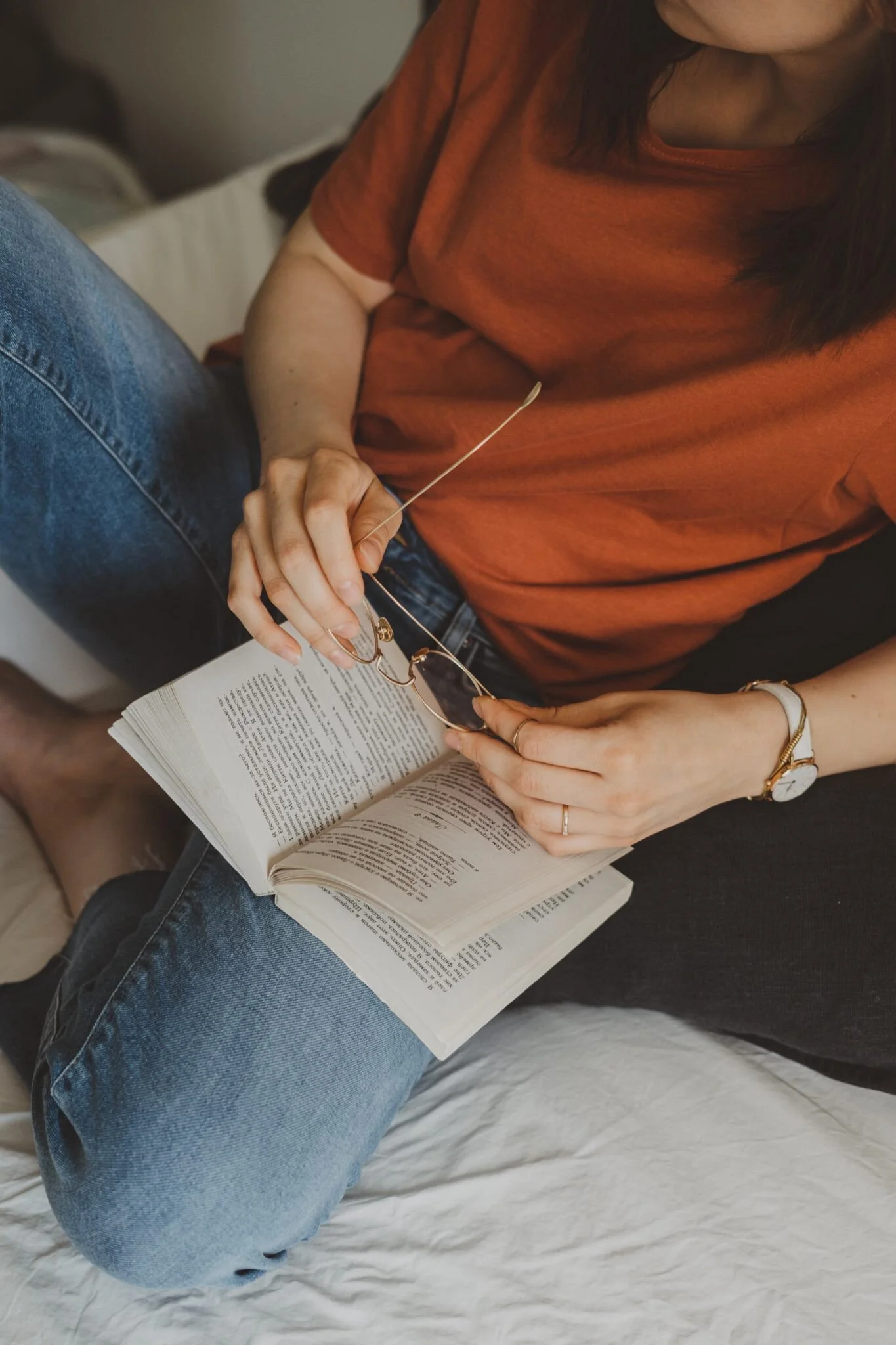
Do you ever wish you could read a book again for the first time? When you read the last line, you move on to the acknowledgments, the paragraph about the author, and even turn to the back of the book to reread the synopsis, trying to find any new information to consume, unwilling to come to terms with the fact that the book is done?
It doesn’t happen to me often, but there are a handful of books I’d undergo hypnosis to be able to read anew. I’ve collected five of those stories into a list of books to get lost in this summer. I’m talking beautifully lost, like the hours that pass when you can’t put a book down. That kind of lost.
If spending hours reading a book doesn’t sound like a productive use of your time, I might first suggest picking up Stillness Is the Key by Ryan Holiday, an underlinable text about the urgent need to find stillness.
While thinking about this list, I took to my bookshelf and pulled two books I distinctly remember getting lost in. I remember the feeling of the sun on my arms, the swell of my pregnant belly, the lawn chair making little imprints on my legs from spending hours inside of The Idiot in the summer of 2017. I remember a baby asleep in my arms as I took every minute I could to read another page of The Heart’s Invisible Furies the following spring. I threw both of those books into this list. They are perfect stories in which you can get hopelessly lost. The other books on the list are ones I’ve read within the past couple of months, and each of the books — all of which are novels — are ones I wish I could approach as a new reader again. They take you through Turkey and Singapore, Ireland and the American South, Budapest and Amsterdam. They fit any mood that might strike you on a balmy summer day — there’s humor, crime, travel, obsession, and, of course, love.
I once read that writers should put everything they have into the piece they are working on, never to save something for later. This list is that for me; it’s every book that took me in to such a degree that I was lost, engrossed, smitten. My hope is that these books do the same for you.
When you’re ready to get lost, here are my suggestions:
1. The Vanishing Half by Brit Bennett
If I read a list of books to get lost in that didn’t include Brit Bennett’s second novel, The Vanishing Half, I wouldn’t trust it and would move right along. This novel is stunning, haunting, expansive. It stretches the mind in such ways I didn’t know were possible, telling the story of identical twins who grew apart and led lives as seemingly different as possible: one Black, one white. It tells of the different places two paths can lead, even when starting at the same junction. Race, class, sex, identity — all of the timeless issues — create the bones of this book that will be a classic of the decade.
If this type of story interests you, I also suggest The Lowland by Jhumpa Lahiri and Homegoing by Yaa Gyasi, both of which also chronicle the divergent lives of siblings and the steep possibilities of differences.
2. The Idiot by Elif Batuman
This is easily one of the funniest novels I’ve ever read. It takes place in the confusing time of the nineties when the internet had just emerged and is narrated by an equally confused freshman at Harvard named Selin. Born to Turkish immigrants, Selin spends her freshman year trying to figure out who she is, how she might get to know the cute boy in her Russian class, and what a proper email looks like. It’s witty, nostalgic, and a beautiful combination of sophisticated and, well, idiotic.
3. The Heart’s Invisible Furies by John Boyne
When I say I couldn’t put this novel down, I mean I carried it around like an extra appendage, picking it up any spare moment I had. It’s the sprawling story of an Irish man searching for his identity. His affluent adoptive parents are quick to tell him he’s not one of them, and his mother, who birthed him out of wedlock as a teenager and was shunned by her rural Irish community, isn’t in the picture. The novel takes us through decades of curiosity, friendship, and discovery, challenging the Catholic church and shining a light on the shadows of postwar Ireland.
4. Crazy Rich Asians by Kevin Kwan
Stay with me. Maybe you’ve seen the movie, maybe you’ve heard some buzz about the books, but if you haven’t read them, and you’re looking for a novel to take you away, here are three of them. If not to learn about haute couture, Singapore’s colonial black and white houses, or the pressures of dynastic Asian families, then for the pure entertainment that comes with the tangled stories of Asia’s wealthiest elite. This series covers the pressures of status and family trees while exposing the wild, beatific, and utterly maniacal lives of the rich and mostly unfamous. While not exactly cerebral, these books are impressive in scope, which the reader wants, as it’s hard to put the books down once you pick them up.
5. The Goldfinch by Donna Tartt
I think this is my favorite book ever — all 771 pages of it. It’s about an underage New Yorker who survives the terrorist bombing which kills his mother, leaving him parentless thanks to an absent, but living, father. He winds up leaving the bombing with a possession that intoxicates him, haunts him, drives him to obsession — and reminds him of his mother. This story is a love letter to art and a testament to family being what you make it. It’s gorgeous and tragic, engrossing and devastating, and completely deserving of the Pulitzer Prize, which it won in 2014. (If on page 353, just before the chapter break, you get chills, your eyes well up, and you think about it for days, weeks, and months after reading it, I want to hear from you.)
This summer, let the hours slip away as you journey inside of these stories that you will never forget. And if you feel a little blue or want a little more after you put the book down, you know who to reach out to.
This post originally appeared in Wit & Delight

Children’s Book Publishing: Why Make a Prototype
There are a lot of things I would do differently if I were to start the indie publishing process of my children’s book all over again. But there is one thing I did — one thing I really did not want to do — that I am really proud of: I shipped before I was ready.

There are a lot of things I would do differently if I were to start the indie publishing process of my children’s book all over again. But there is one thing I did — one thing I really did not want to do — that I am really proud of: I shipped before I was ready.
I was asked to speak at an online networking event for women called Lady Boss Virtual last spring. The talk was less about the actual children’s book publishing process than it was about pursuing my dream to publish a book.
At the time of the event, my book was written, illustrated, designed, packaged into a neat little PDF, and was at the printer being produced.
My book is called Rosie and the Hobby Farm, and there happened to be a woman at the event who owns a hobby farm just 30 minutes away from me. We exchanged information and hopped on FaceTime so I could get a tour of the farm. She insisted that I do a virtual book reading at the farm.
I said I couldn’t — I didn’t have the book yet.
This wonderful woman called me out on my limited belief. She challenged me to think more opportunistically, and the two of us decided that I would do a book reading the following weekend at her farm.
We called in some tech support, I signed up for a pro Zoom account, and blasted information about my virtual storytime on social media. I was running much faster than I was used to and was worried that I’d miss something important.
Since I didn’t have my book back from the printer yet, I cobbled something together using cardstock, my home-office printer, staples, and some masking tape.
Check out my prototype:

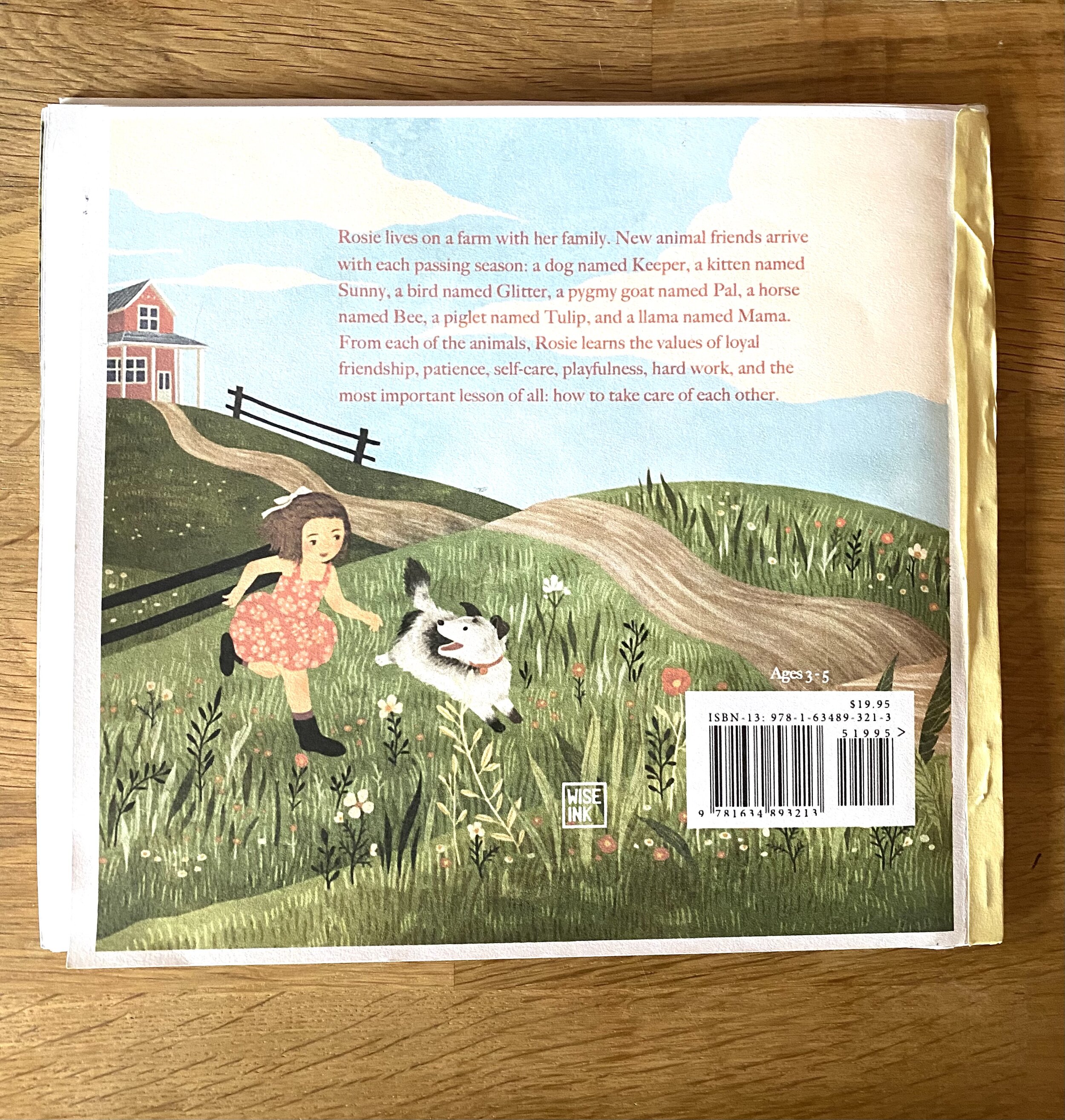
That’s the book I read from in front of some 50+ people. And it was perfect. It had the words and a representation of the illustrations (I say representation because, naturally, they are much more beautiful in the published book), and I was able to give my viewers an idea of what this book was going to be like. Here I am posing with the prototype:

People loved it! My friends and their kids joined, people I didn’t know signed up, and I even had a small group at the farm. The event was a great way to generate buzz and excitement about my forthcoming book, and I even got a few pre-orders out of it.
But more importantly, I learned a lesson:
Sometimes you need to ship before you are ready.
Waiting until everything is perfect is, in my opinion now, an act more devoted to the ego than to the idea. By creating this crappy prototype of my book, I was able to introduce my book to the public and get some practice reading in front of an audience, all the while farm animals ran around and young children were able to watch from the safety of their homes (this all happened at the beginning of the pandemic, after all).
Had I waited until Covid passed (now that seems funny, back then it seemed like a normal thing to say) or postponed the storytime until I had a physical copy of my book, which wasn’t ready for another six weeks, I’d have missed out on this opportunity to share my book before it was even released.

It’s lovely, it’s in some of my all-time favorite bookstores, and I just placed an order for a second print run, meaning there are about 1,000 copies from my first printing in the hands of children right now. That all still happened even though I shipped before I was ready, even though I read from a prototype that looks like an elementary school project.
Now, my prototype is safely filed away, and I intend to hang onto it. It serves as a reminder that ideas don’t start out as highly polished hardcover books in libraries, and they’re not too precious to share before they’re ready.
For more articles like this, subscribe to my weekly (no more, sometimes less) email.

The Incredible Transformation That Happens When You Decide You Are Enough
Springtime is the prototypical unveiling of transformation. You can’t step outside without each of your senses seeking out the changes that took hold during winter. Daffodils bloom so dramatically their stems bend with weight, apple trees explode with kaleidoscopic arrangements of pinks and purples, the sun bursts to set all of this growth in motion.

Springtime is the prototypical unveiling of transformation. You can’t step outside without each of your senses seeking out the changes that took hold during winter. Daffodils bloom so dramatically their stems bend with weight, apple trees explode with kaleidoscopic arrangements of pinks and purples, the sun bursts to set all of this growth in motion.
And people transform too. This year especially. People are leaving their homes and establishments are populating again, and everybody has a chance at revealing their transformations. As I considered my own evolution, I found myself feeling a little stagnant. What’s my big reveal going to be? Which evolutions did I undergo all winter in order to step outside with my best — possibly pedicured — foot forward? I felt stumped for a moment. And then I realized that my own blossoming happened months ago.
I remember it vividly. It was winter, too cold to spend any significant time outside with my children — a toddler and an infant. I was sitting on the miniature stool at my daughter’s miniature table. I looked out the sliding glass door next to me: leafless branches shuddered in the frosty wind. It was only morning and we had already done so many different activities. Museums and play places were shut down. Recreation activities were frozen like the skating rinks outside. I tried to come up with an idea for what to do next, and then I thought about the next day, and the next week, and the remaining months until spring — and I began to panic.
What would we do? How would we endure?
“You torment yourself,” my husband told me when I expressed my worries about how I’d keep the kids occupied all winter. So hard had I pushed against my instincts and my natural urge to surrender, so badly did I want to provide my children with enriching experiences that they would have received at daycare had I not been laid off, that I ran myself into the ground trying to be all things to them.
My husband was right: not only was my self-tormenting unnecessary, but it made things much worse. What did I really need to feel guilty about when the entire planet was just doing what they could to get by? Why would I have been an exception?
This pressure point is where I let go; it’s when I blossomed.
Beyond meeting my children’s basic needs like food and shelter, I gave them the one thing they really needed, and the thing they most wanted: me. I was with them when they woke up and I was with them when they went to sleep — and for every moment in between. This was enough for them, and my transformation happened the moment I realized that.
It’s incredible what happens when you decide you are enough. You give yourself permission to act without scrutinizing your every move, which makes taking action so much easier. And when actions are easier, and when your analysis of said actions are tempered, you begin to move from one action to the next without much thought.
I gave myself grace — and my god did that feel good.
It started small. At first I simply noticed when I was making things harder for myself than I needed to. Once I became aware, I began to cut myself some slack. I allowed myself to throw on the television to preoccupy my older child while I nursed the baby and, eventually, I did it guilt-free. If I became stressed and yelled, I didn’t get down on myself for losing my cool. I just told my toddler that I felt overwhelmed and hadn’t done a good job of managing my emotions. Talking through it, even with a tiny person, was a way of telling myself it was okay.
Because I was — I am — enough for them. This realization led me to another important transformation: my ability to mute the noise all around me about parenting. When people asked me if my baby was sleeping through the night yet or if I had any sort of educational schedule for my toddler during the day, I began to just say “no” and continue on without defending myself, knowing there was nobody better equipped to make the decisions I was making for my children. The onus had always been on me to make the decisions for them, but only when I decided I was enough for them did I stop second-guessing every decision I made.
Yes, I still have my insecurities. I recently unfollowed a lot of mother-centric Instagram accounts because old comparison habits started to creep up, which I noticed when I started to question some decisions I’d made. Like the magnolia tree in my front yard that grows a little bit each year, my transformation is incremental, not one-and-done.
Now that the buds are peeking out of the trees, now that libraries and gathering places are slowly opening back up, I have a couple of choices: I can go back to being the parent I was before this transformation occurred; the parent I fought so hard to remain at first. Or I can lean into the one I’ve become — the one who gives herself grace and recognizes when she’s setting herself up with impossible standards that can’t be met.
We’ve all grown this past year, in some ways better than others, but the growth happened regardless, and it’s important that we all take the time to recognize just how far we’ve come. And as life creeps back to a semi-normal state, we all have the opportunity to decide if we want to return to the way we were, or if we want to remain the more agile, more forgiving people we’ve become.
I know which choice I’m making.
This post originally appeared in Wit & Delight

How to Batch Your Work, Be More Successful, and Liberate Your Leisure Mind
While flipping through a recent issue of The Atlantic, I landed on an article called How Civilization Broke our Brains: What can hunter-gatherer societies teach us about work, time, and happiness? It featured a drawing of a man in a hammock surrounded by lush greenery and blue skies. It’s idyllic at first glance. But a closer look reveals the man is lurching out of the hammock as he looks up at the phone-, envelope-, and other work-shaped clouds closing in on him.

While flipping through a recent issue of The Atlantic, I landed on an article called How Civilization Broke our Brains: What can hunter-gatherer societies teach us about work, time, and happiness? It featured a drawing of a man in a hammock surrounded by lush greenery and blue skies. It’s idyllic at first glance. But a closer look reveals the man is lurching out of the hammock as he looks up at the phone-, envelope-, and other work-shaped clouds closing in on him.
The article explores the tension between the productivity mind and the leisure mind, pointing out that our hunter-gatherer ancestors had considerably more downtime than the average American does today (who, according to the piece, spends approximately forty-four hours weekly working), even though they lacked the modern conveniences we so happily utilize—checking our email on our phones while our pasta boils in pots on gas stoves.
The man in this photo is relaxing, but it’s not his leisure mind at play. His productive mind has taken over, plaguing his downtime with frets about work and other responsibilities. Talking about the Sunday Scaries, the infamous anxiety many feel on Sundays as the workweek nears and the sun sets on the leisurely weekend, author Derek Thompson writes:
“Guilt about recent lethargy kicks in as productivity mind gears up, and apprehension about workaday pressure builds as leisure mind cedes power.”
It’s not just an elegant way of talking about the Sunday Scaries; it’s pinpointing something real, something so many of us feel: guilt for having spent time doing something of leisure when we could have done something more productive, like reconciling our budgets or Marie Kondo-ing our underwear drawers.
I feel it all the time. Or I used to. Due to a layoff, I recently became a stay-at-home mother of two: an infant and a toddler. My hands are busy. On top of my mom duties, I keep a steady stream of projects that require me to use my brain in different and, dare I say, more intellectual ways than I do while painting with my three-year-old—like writing and marketing my children’s book.
And yet, I don’t feel like I’m so busy all the time. I don’t feel overwhelmed. And, most importantly, I don’t feel guilty when I shut off the list of productive things I need to do and I tackle my other list, my leisure list, the one that allows me to bring my best self to all of my responsibilities: the to-be-read list of books.
My lack of guilt can be mostly attributed to a process I adopted right around the time of my layoff: batching my work. I learned about this process at such a serendipitous time that I didn’t even think before I started doing it; I just dove right in.
My downtime is fleeting and spotty at best. What used to happen is that when the time arose in which I could get some work done, I would get to my computer and would spend the majority of that small break trying to decide what to focus on. Do I respond to emails? Do I edit the article I was working on? Do I need to do some more research? Because I hadn’t had any process in place, and could never determine which task was most important to work on given the time I had in front of me, I would oscillate between the many.
Switching from task to task without making meaningful progress was damaging to my productivity, and, according to an article in Psychology Today, it was promoting stress and fatigue. The article continues:
“Multitasking creates an illusion of parallel activity, but actually it requires mental switching from one task to another. This drains the glucose fuel needed by the brain, making the brain less efficient and creating the feeling of being tired.”
Bouncing around tasks like this made my work suffer. My productivity brain was hurting and my leisure brain yearned to be ignited. Because my work was so unproductive, I never fully allowed my leisure brain to show up, to enjoy, to recharge.
Then I heard of work batching and I got busy—in a productive and leisurely way—immediately.
Work batching is a highly Googleable concept, but here’s what it looks like for me:
On Sunday nights, I dedicate ten minutes to thinking about my forthcoming week. I identify what my priorities are, thinking as small as tiny tasks and as big as lofty goals. I then assign an overarching theme to each day, Monday through Friday. If I have fewer than five themes I want to focus on in any given week, I’ll double up and repeat the theme later in the week. In the example below, you’ll see I only have three themes. This is because there are three big pillars I’m currently working on. I use Wit & Delight’s Stay on Track Desktop Notepad to write out my work batching, but you could use any journal or calendar. For work batching, your success relies on your dedication and planning; you could use a scrap of paper if it helped keep you organized.
To keep this how-to as simple as possible, here’s a rudimentary example of how I batch my work:
Monday: Article writing
Tuesday: Book marketing
Wednesday: Article writing
Thursday: Email planning and scheduling
Friday: Open
I will generally leave Friday open so I can fill it in later in the week with the theme that I couldn’t get to or want to spend more time on. The themes above are broad, but they’re specific enough for me to focus when I get to my computer. If I have time on a Wednesday to get some work done, I will not open my web browser, check email, or go on social media once I open up my laptop. Instead, I will open up Word and get to work on whichever article I’m writing, because I reviewed my work batching planner that morning and reminded myself that my focus for that day was article writing. Yes, I still check my emails throughout the day and complete other menial tasks, but when I have a chunk of time to which I can devote myself to getting real work done, I don’t have to think about my priority; I already determined it on Sunday night.
Your process would look different from mine, and, of course, not everybody can batch their work into themes as broadly as I do. If that’s the case, consider writing a hierarchy of themes in each day. The single most beneficial part of work batching for me has been deciding in advance what I will be working on the next time I get to my computer. If you’re at your computer all day, work batching can still benefit you if you are able to separate your time into themed tasks, such as creative work, responding to emails, research, and writing, for example. Doing this work on Sundays take all the doubts and questions out of the work during the week, making Sundays a little less scary. (And yes, I still experience Sunday Scaries sometimes.)
This simple process has led to better focus, much less wasted time, and—amazingly—a lot of success for me. I’ve been able to increase my workload while decreasing the amount of time I put into it strictly because I’ve been more focused. And if those weren’t enough reasons to keep up this process, when I have some time to tap into my leisure mind, I do it without regret or remorse; I do it fully and without thinking I should be doing something else. This fulfills me, and the next opportunity I get to spend some time working, I approach my batched themes with more energy and a clearer mind.
Though I didn’t have the terminology when I implemented this process, batching my work has helped me weave in and out of my productive and leisure brain, showing up for each better than I had been before.
This post originally appeared on Wit & Delight.

Perfectionism, Identity, and the Optics of Worthiness
My husband taught me something about flowers recently. Geranium, he told me, is a fault in wine. We were discussing the floral scent and had agreed that we both liked it. It’s lovely — it’s sweet and punchy and smells like a sun-drenched field pierced with bright crimson petals. But it signifies an unwanted reaction during the winemaking process. In other words, when you get a taste of geranium, you know something didn’t work the way it was supposed to.
Perfectionism is a geranium. Its optics are gorgeous, illuminated by a halo of grit, strength, and flawlessness. But perfectionism can be a fault. It cheats us from the art that so many people would have created, and indeed could have created, but didn’t because it wasn’t good enough. It wasn’t so-called perfect. Perfectionism often prevents those who bear its weight from starting something new, from even trying.

My husband taught me something about flowers recently. Geranium, he told me, is a fault in wine. We were discussing the floral scent and had agreed that we both liked it. It’s lovely — it’s sweet and punchy and smells like a sun-drenched field pierced with bright crimson petals. But it signifies an unwanted reaction during the winemaking process. In other words, when you get a taste of geranium, you know something didn’t work the way it was supposed to.
Perfectionism is a geranium. Its optics are gorgeous, illuminated by a halo of grit, strength, and flawlessness. But perfectionism can be a fault. It cheats us from the art that so many people would have created, and indeed could have created, but didn’t because it wasn’t good enough. It wasn’t so-called perfect. Perfectionism often prevents those who bear its weight from starting something new, from even trying.
A badge of honor so many wear as if it were a requirement to worthiness, perfectionism is all around us. How often do you hear people slip into a conversation that they are a perfectionist? I hear and read it often, and every single time I do, I wait for that accomplished feeling of being able to tell another person that I, too, strive for perfection and nothing short of it. But it never, ever comes. And every time, I feel less than the person who just posited their perfectionism.
I bring this up because when it comes to perfectionism, I have always had an identity crisis. I’ve thought that in order to succeed in this world full of them, that I, too, needed to be a perfectionist. But it’s never come naturally to me, and what does that say about me? What does it say that, when others in my cohort are pushing harder, going further, working longer to achieve perfection, I, instead, am happy with very good, great, exceptional — but not perfect?
I have long experienced self-consciousness around my lack of perfectionism. I have been chastised by superiors for not having achieved perfection, and even though I knew in my heart that striving for perfection would mean I’d always be working toward something unachievable, I listened to their reprimands and questioned my own standards, wondering why I thought something was great while others only saw imperfection. I let their words create a soapbox upon which I knew I would never stand. And so I changed, I removed my creativity from my processes, and I did what I could to meet their more objective standards. In my attempt to be the perfectionist I knew others wanted from me, I stripped myself of the qualities that perfectionists can lack: the ability to produce; the propensity to try, fail, and learn.
In effect, I became less than — all in an attempt to meet perfectionist standards. And for what? All this self-inflicted transformation did was prove to me further that I am unlike other perfectionists, and perfectionism is not something you can fake.
Even though we know that being a perfectionist can be paralyzing, and articles and books about overcoming perfectionism abound, it still serves as a standard to live up to. People still ascribe to the notion that being a perfectionist is a good thing. Like when the interviewer asks you what your biggest fault is, and you say you’re too hard on yourself or you have too high of standards. This illuminates your positive attributes of meticulousness and high-quality output, leaving a propensity to waste time, or worse — not ship anything — in the shadows.
It’s like an ingredient label. When someone is a perfectionist, you know exactly what you’re going to get from them. This is an attractive label to place upon ourselves. It provides clarity in a world severely lacking it. It’s a reassurance that the work that is yet to be produced will be of the very highest quality. As someone with a more nebulous label, I often feel like I need to prove something to make up for my lack of perfectionism. This disillusionment is harmful at best.
Please don’t mistake my own insecurities about not being a perfectionist as a bashing of those who are. If you aim for perfection and let yourself achieve it, I commend you. I am in awe of your bravura. And I hope you know that the imperfect stuff you do is important, too.
Like geraniums, there are many different varieties of perfectionists. Maybe the lesson here is that perfectionism is not a scale upon which our worth is measured. No matter what variety we are, perfectionist or not, our contributions to society are all valuable, and these labels are just ways to help us better understand our inner workings — the reactions that happen during our own processes.
This post originally appeared on Wit & Delight

5 Takeaways from My Most Productive Year Ever
As one is wont to do this time of year, I’ve been reflecting on everything I accomplished, what I didn’t achieve but hoped to, and how I can do better next year.
Yes, 2020 was an absolute shitstorm. But — and I realize the privilege that comes with this statement —it was a good year for me. I didn’t lose anybody I love (though I did lose my job), my and my family’s wellbeing have not been put on the line, and I’ve had the most productive year since graduate school.
I won’t bore you with a comprehensive tally of my achievements, but I will give you some context as to what I mean when I say 2020 was a productive year for me:
I had a baby
I published my first book
I wrote seven articles for Wit & Delight
I launched a weekly email
I read 42 books
I wrote 23,573 words in my novel-in-progress
In analyzing how I accomplished everything above, I’ve identified some trends that contributed to each of them. Here are five takeaways from my productive year. Use them, tweak them, and make 2021 your best year
You need to know what you want
This is the first step to achieving anything of importance. If you don’t know what you’re going after, how will you know when you get there? Don’t let this overwhelm you, it can be as simple as a list of things that are important to you. For example, for years I had a piece of paper with the following four words on it hanging on my mirror:
reading, writing, travel, yoga
These are my hobbies. These are me. They are the things that make me feel sad when I don’t make time for them. Since writing the list I’ve gotten married and had two children, so I’ve added a couple of things to it, but these four things remain important to me and so I work toward them as much as possible.
Unfortunately, travel has been out of the cards this year. But — and this is a big one — the absence of one thing makes more space for others. So all of the time and money I’ve saved on not traveling has been funneled into the other things that matter to me. And since I’m crystal clear on what is important to me, when it comes to the end of the year and I reflect on what I’ve accomplished, I can confidently say I never lost sight of what I care about, therefore I spent an adequate amount of time on it.
Habit tracking is the ultimate tool
If you learn one thing from this, let it be the power of habit tracking. I cannot say enough about it. I started tracking my habits in November of 2019 and haven’t missed a day since — and I plan to track them in perpetuity.
In the simplest terms, habit tracking is when you write out your habits and track each day that you do them. After one month of tracking your habits, you can really begin to understand where you spend your time and, equally as important, where you don’t. This allows you to recalibrate and redistribute your time amongst that which you really value. When you have to check in on your habits nightly, you’re not only holding yourself accountable, but you are reminding yourself of the direction you intend to go. So when you go day after day after day not doing woodwork or running or creating a side hustle, you are confronted with a decision: either change your focus so that you spend more time doing the habit, or come to terms with the fact that you lack the dedication needed to do it. This awareness positions you to be able to have a productive year.
For more on habit tracking, here’s an analysis after my first year.
You have time, you just need to set it aside
One of the most common questions I get is, how do you have the time to read so much? The answer is simple: I make the time. The popular saying goes that we all have the same amount of time as Beyoncé. And while she has the money and people to help her with everything, the saying is true: we all have 24 hours in our days. It’s how we spend those 24 hours that matters. If reading a lot of books matters to you, you’ll find the time to do it. If CrossFit or barre or yoga matter to you, you’ll find the time to do them. This goes for every single thing you want to achieve. I know it can be tough, but for everything that matters to you — really matters, matters enough to make your habit tracking list — you can find the time.
Here, I wrote about 10 habits that help me read 40+ books per year if you need some encouragement.
Batching your work helps those with time constraints
I write in fits and starts, and that’s because I have two young children who take up a lot of my time and energy. So when I have 20 minutes of downtime (like right now as I write this), I don’t want to waste any time trying to figure out what to do. Instead, I determine ahead of time what I will work on each day of the week, creating “batches” or themes, and when I have any amount of free time, I dive into whatever it is I’ve dedicated that day to. This process has increased my productivity immensely. Here’s a deeper explanation of how it works.
Sometimes you need to pave your own way
My second-biggest accomplishment this year was independently publishing my children’s book (my first was birthing my son Enzo). When I found myself writing a sweet little story that I loved, I decided I wanted to do something with it. So I pitched it to a publishing house (just one, which is not how it works), then decided to take publishing into my own hands. I could have tried to find an agent and waited and waited until a publishing house accepted me, but instead, I chose to publish it myself. And after taking matters into my own hands, I can now proudly say that I published my first book in 2020.
I chronicled the entire process here. As you’ll see, it took a lot of work, a lot of money — money which I am still trying to earn back so I can break even — and a lot of dedication. But by paving my own way, I was able to achieve one of my dreams. And the hard work I’ve put into it has made it all the more meaningful.
These takeaways are not new, not surprising, not revolutionary. But they are game-changers and they will help you be more productive next year. You just have to know what you want and want it bad enough.
Onward and upward in the new year!
For more articles like this, subscribe to my weekly (no more, sometimes less) email.